What Is Forex? A Beginner’s Guide to the World’s Largest Financial Market
Understanding the Foreign Exchange Market
What Is Forex
The foreign exchange market, commonly known as Forex or FX, is the global marketplace where one currency is exchanged for another. It is the largest and most liquid financial market in the world, with trillions of dollars changing hands every day.
While the terms foreign exchange, FX, and Forex are often used interchangeably, Forex has become the most widely recognized name for the market, particularly among traders and investors.
Unlike stocks or futures, Forex does not trade on a centralized exchange. Instead, transactions take place electronically between banks, financial institutions, corporations, governments, hedge funds, and retail traders through a global network operating around the clock.
What Is Forex
How Does the Forex Market Work?
Every Forex transaction involves two currencies.
When you buy one currency, you are simultaneously selling another. This is why currencies are always quoted in pairs, such as EURUSD, GBPUSD, USDJPY, EURGBP and GBPJPY.
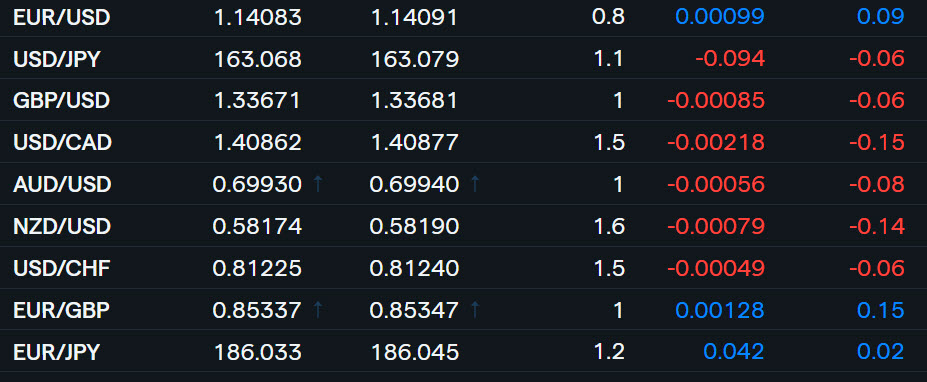
An exchange rate represents the value of one currency relative to another. For example, if EURUSD is trading at 1.1408, one euro is worth 1.1408 U.S. dollars.
Because economic conditions, interest rates, political events, and investor sentiment are constantly changing, exchange rates fluctuate continuously throughout the trading day. If some of these terms are new to you, our list of forex trading terms is a good place to start.
Why Do Exchange Rates Move?
Before 1971, many currencies were linked to the U.S. dollar under the Bretton Woods system of fixed exchange rates.
When that system ended, most major currencies began trading under a floating exchange rate system, where prices are determined by supply and demand in the global marketplace.
Today, exchange rates respond to a wide range of factors, including:
- Interest rates
- Inflation
- Economic growth
- Central bank policy
- Political developments
- Geopolitical events
- Investor sentiment
- International capital flows
These constantly changing forces are what create trading opportunities in the Forex market.
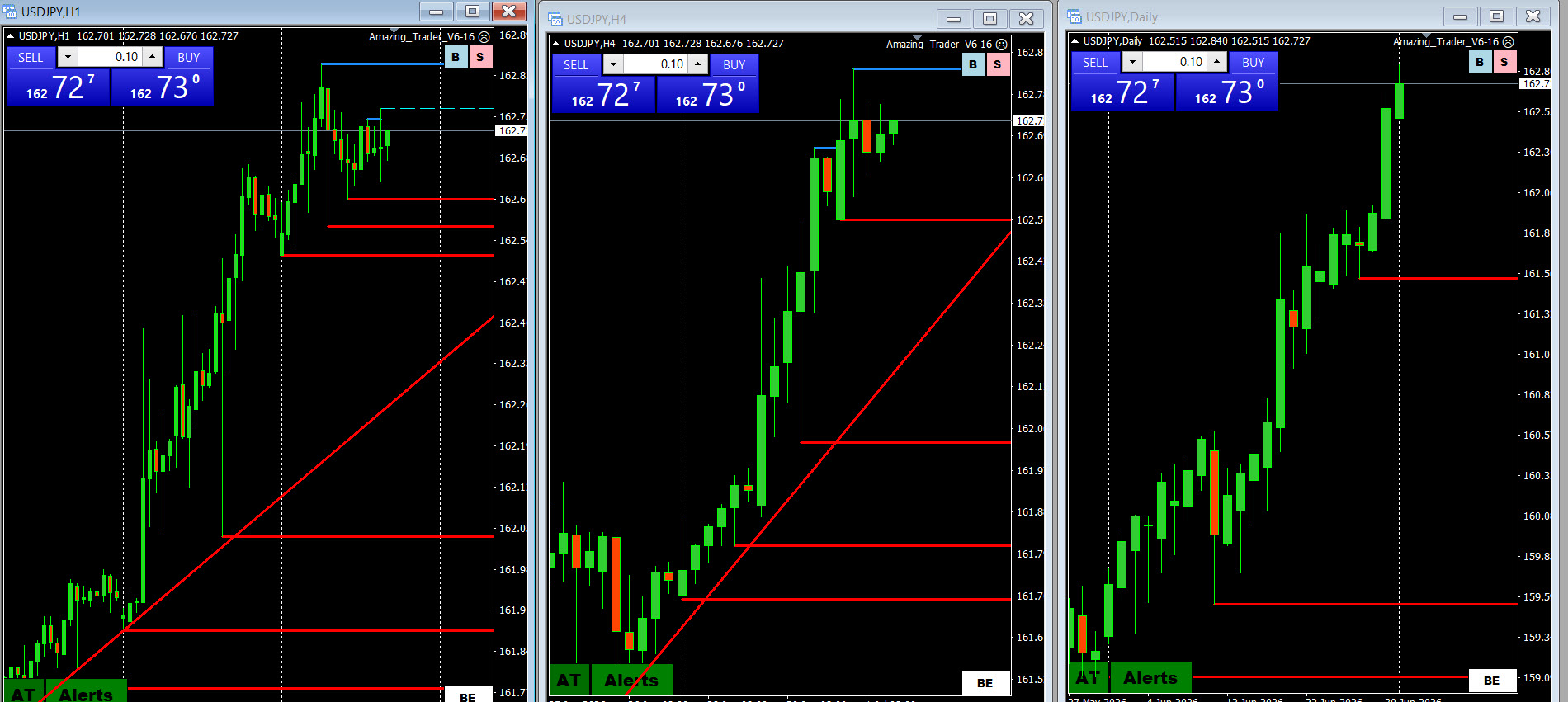
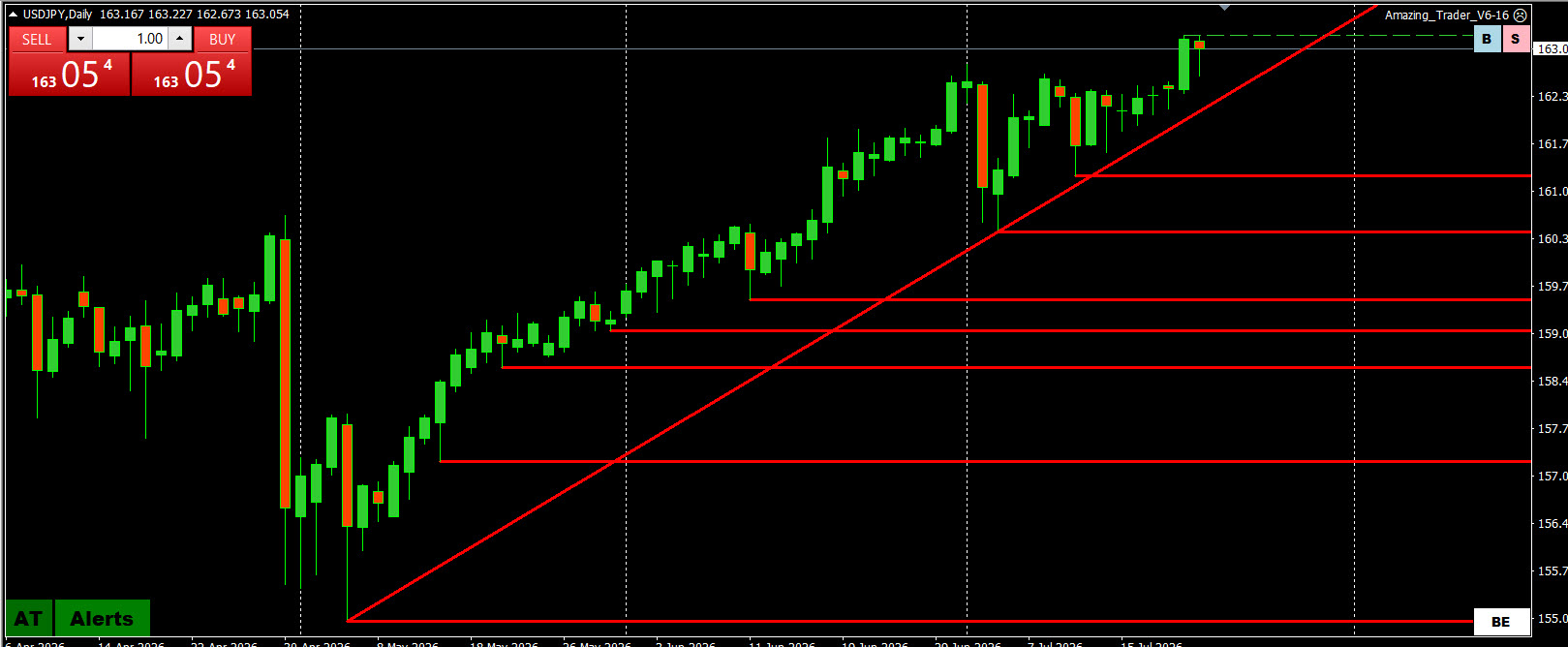
USDJPY DAILY CHART
Who Participates in the Forex Market?
Forex was once dominated almost exclusively by commercial banks, investment banks, and central banks.
Today, the market has evolved into a truly global financial marketplace that includes:
- Central banks
- Commercial and investment banks
- Hedge funds
- Asset managers
- Multinational corporations
- Governments
- Importers and exporters
- Retail traders and investors
Although retail trading has grown significantly through electronic trading platforms, institutional participants still account for the vast majority of daily trading volume.
Why Forex Is Different
One of the unique features of Forex is that it trades 24 hours a day, five days a week.
Trading begins Monday morning in New Zealand and moves through the major financial centers of Sydney, Tokyo, Singapore, Hong Kong, Frankfurt, London, and New York before closing on Friday at 5 p.m. Eastern time in the United States.
As each financial center opens, liquidity increases, allowing market participants around the world to react immediately to economic reports, central bank decisions, geopolitical events, and breaking news.
The growth of electronic trading has also made Forex accessible to individual traders, who can trade from virtually anywhere using online platforms and mobile devices.
Why Traders Choose Forex
Many traders are attracted to Forex because it offers several advantages:
- Nearly 24-hour trading during the business week
- Exceptional liquidity
- Competitive bid-ask spreads
- Flexible position sizes
- Margin trading (leverage)
- The ability to profit in both rising and falling markets
These characteristics have helped make Forex one of the most actively traded financial markets in the world. Before using margin, make sure you understand pips, margin and leverage.
What Is Forex
So, What Is Forex?
At its core, Forex is the global marketplace where currencies are bought and sold. Every exchange rate reflects the relative value of one currency against another, with prices constantly changing as economic conditions, monetary policy, and global capital flows evolve.
For traders, understanding how and why currencies move is far more important than simply knowing what Forex is. The market is driven by expectations, supply and demand, and the actions of participants ranging from central banks to multinational corporations and individual investors.
Whether your goal is to trade currencies or simply better understand the global economy, learning how the Forex market works is the first step toward becoming a more informed investor. When you are ready to go further, read our complete guide to forex trading and how to get started in forex trading.
Trading Blog
Daily Tips
About author