
How to Use Currency Crosses to Trade the Spot Forex Market
and Their Impact on Euro Dollar, GBP/USD, and Other Major Pairs
Euro Dollar
Most retail traders spend their time watching individual currency pairs such as EURUSD, GB/USD, or USDJPY. They analyze charts, monitor economic releases, and follow technical indicators while completely ignoring one of the biggest drivers of short-term price movement—the currency crosses.
Professional traders know that significant buying or selling in a cross can influence multiple currency pairs simultaneously. Even if you never place a trade in EURGBP or EURJPY, understanding what those crosses are telling you can provide valuable insight into where money is flowing and which currencies are under the greatest buying or selling pressure.
The ability to recognize these cross-currency flows can give traders an important edge when trading the spot forex market.
A Simple Question Every Forex Trader Should Consider
Imagine someone tells you there is a large institutional order to:
- Buy euros
- Sell British pounds
Would you:
- Sell EURUSD and buy GBPUSD?
- Buy EURUSD and sell GBPUSD?
- Stay out of the market until the order is complete?
Now reverse the situation.
Suppose a major institution needs to:
- Sell euros
- Buy British pounds
should that affect your outlook on Euro Dollar and GBPUSD?
The answer is not always obvious, but understanding how cross-currency flows work can help explain why currencies sometimes move in ways that appear confusing to retail traders.
Retail Traders Rarely See the Real Order Flow
One of the biggest disadvantages retail traders face is that they are outsiders looking in.
Years ago, dealers at major banks often had a better understanding of institutional order flow because they were directly involved in executing customer business. Today, increased regulation, anonymous electronic trading platforms, and algorithmic execution have dramatically reduced the visibility of those flows
As a result, most traders are left trying to interpret price action after the fact.
Fortunately, the market often leaves clues.
One of the best places to find those clues is in the behavior of the currency crosses.
What Is a Currency Cross?
A currency cross is simply a currency pair that does not include the U.S. dollar.
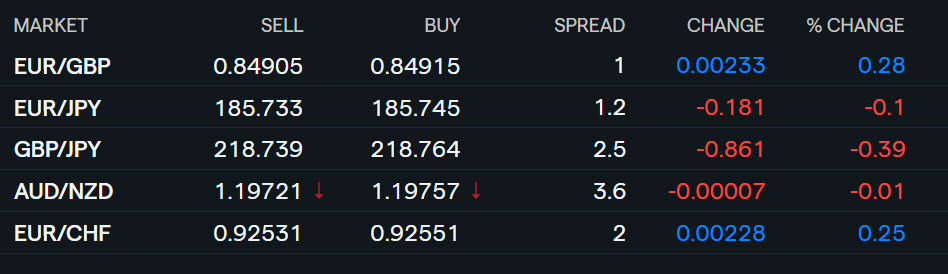
Examples include:
- EURGBP
- EURJPY
- GBPJPY
- AUDNZD
- EURCHF
Euro Dollar
Although the dollar is not part of these quotes, it often plays an important role behind the scenes because the transactions needed to create the cross frequently pass through the U.S. dollar.
How Currency Crosses Are Calculated
Understanding the math behind currency crosses helps explain why movements in one market can influence another.
Example 1: EURGBP
EURUSD = 1.1350
GBPUSD = 1.3480
Formula:
EURUSD ÷ GBPUSD = EURGBP
1.1450 ÷ 1.34800 = 0.8449
Example 2: EURJPY
EURUSD = 1.1450
USD/JPY = 162.30
Formula:
EURUSD × USDJPY = EURJPY
1.1450× 162.30 =185.83
The calculation changes depending on how each currency is quoted against the U.S. dollar.
It is simple algebra as th calculation removes the U.S> dollar from the equation.
Forex Has Changed: It’s No Longer a Dollar-Centric Market
When I first began trading, nearly every major move revolved around the U.S. dollar.
Currencies generally moved in the same direction against the dollar, with only small differences in relative strength.
Today, the market looks very different.
Cross-currency trading has become a major source of liquidity, and institutional flows frequently drive price action independently of the overall U.S. dollar trend.
It is now common to see one currency strengthening while another weakens, even though both are trading against the same U.S. dollar.
This is one reason why traders sometimes struggle to understand seemingly contradictory market moves.
How Cross-Currency Flows Affect Spot Forex
Suppose a large institution needs to buy euros while simultaneously selling British pounds through EURGBP.
To complete that transaction, buying pressure may appear in EURUSD while selling pressure develops in GBPUSD.
Initially, both pairs may react to the order.
However, markets rarely absorb buying and selling pressure equally.
If Euro Dollar encounters heavy resistance while GBPUSD remains vulnerable, the euro buying may stall while sterling selling accelerates.
The result?
GBPUSD often experiences the larger move, even though the original transaction occurred in EURGBP.
The opposite can also occur.
If EURUSD is already in a strong bullish trend, euro demand may dominate while GBPUSD experiences only limited weakness.
The key observation is not simply that a cross is moving but which side of the trade is having more difficulty absorbing the flows and thus the greater impact..
That often reveals where market liquidity is weakest and where the next directional move may develop.
One of the Biggest Clues: Opposite Moves Against the Dollar
One useful confirmation that genuine institutional flows are driving the market is when two currencies begin moving in opposite directions against the U.S. dollar.
For example:
- GBPUSD rises
- EURUSD falls
This type of divergence often signals that cross-currency flows, not broad dollar strength or weakness, are influencing price action.
When you observe this behavior alongside movement in EURGBP, the pieces of the puzzle begin to fit together.
Reading the Market Like Institutional Traders
Professional traders rarely analyze a single currency pair in isolation.
Instead, they constantly compare related markets to identify where capital is flowing.
Watching the major currency crosses can provide valuable information about:
- Institutional buying and selling
- Relative currency strength
- Liquidity imbalances
- Potential breakouts
- False moves in individual spot pairs
Although retail traders cannot see every institutional order, they can often infer what is happening by monitoring how the crosses behave relative to the major currency pairs.
Real-World Example
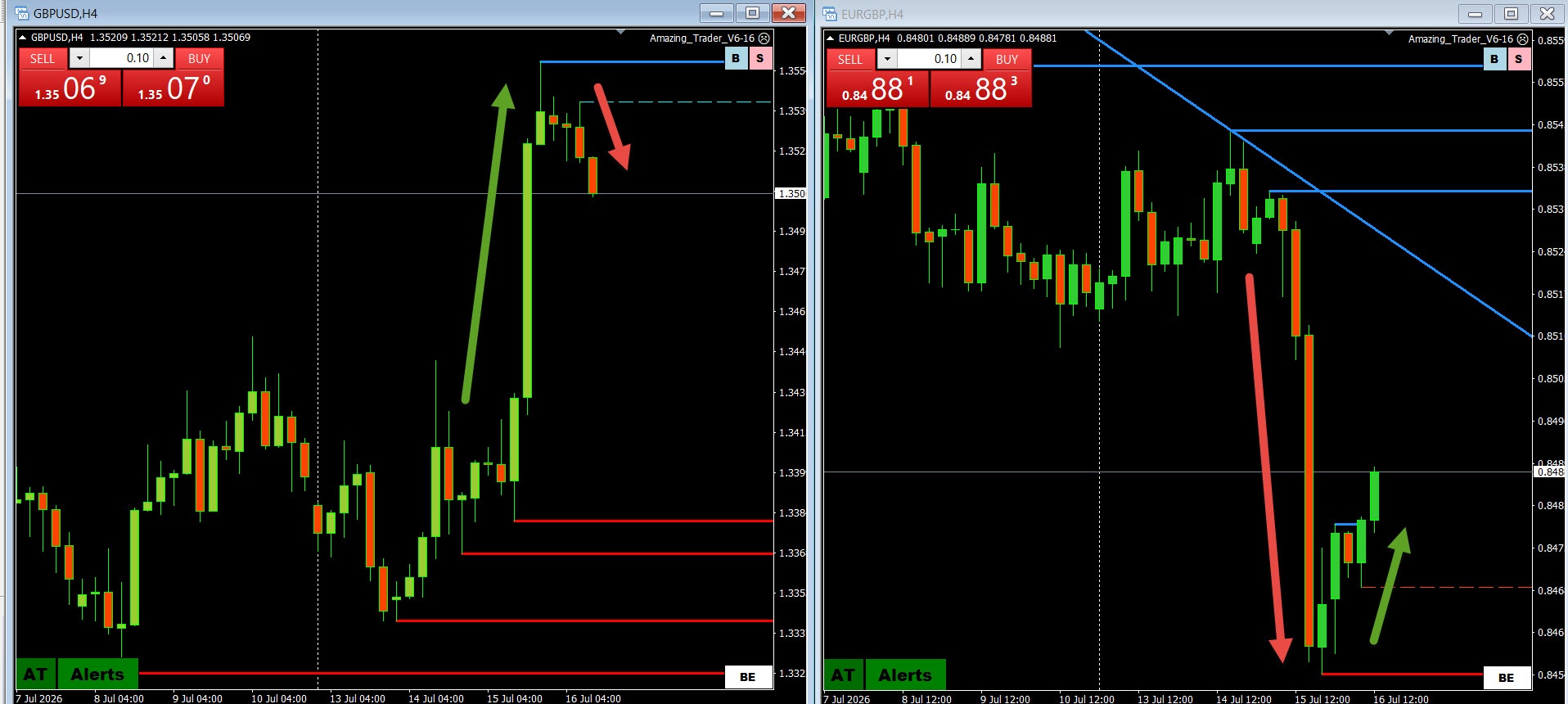
On July 15,2026, EURGBP fell sharply
As the cross strengthened:
- GBPUSD moved higher.
- EURUSD stayed in a tight range
- Market had trouble absorbing the GBP side of the cross
- Simple algebra: If EURUSD stayed stable, the only way EUREGBP could fall is if GBPUSD rose.
The sequence indicated that the buying component of the cross had the greater market impact on GBPUSD (*buying) until the sell order was filled.
Euro Dollar
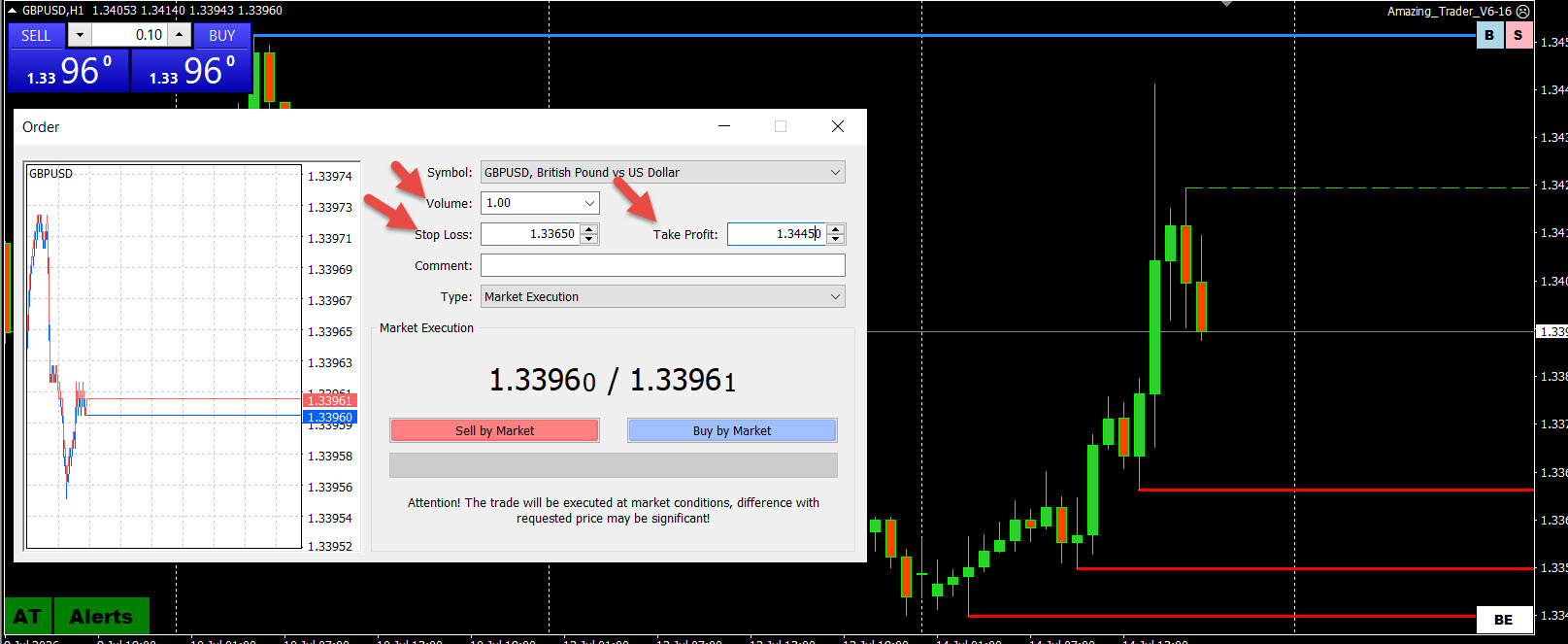
GBPUSD EURGBP
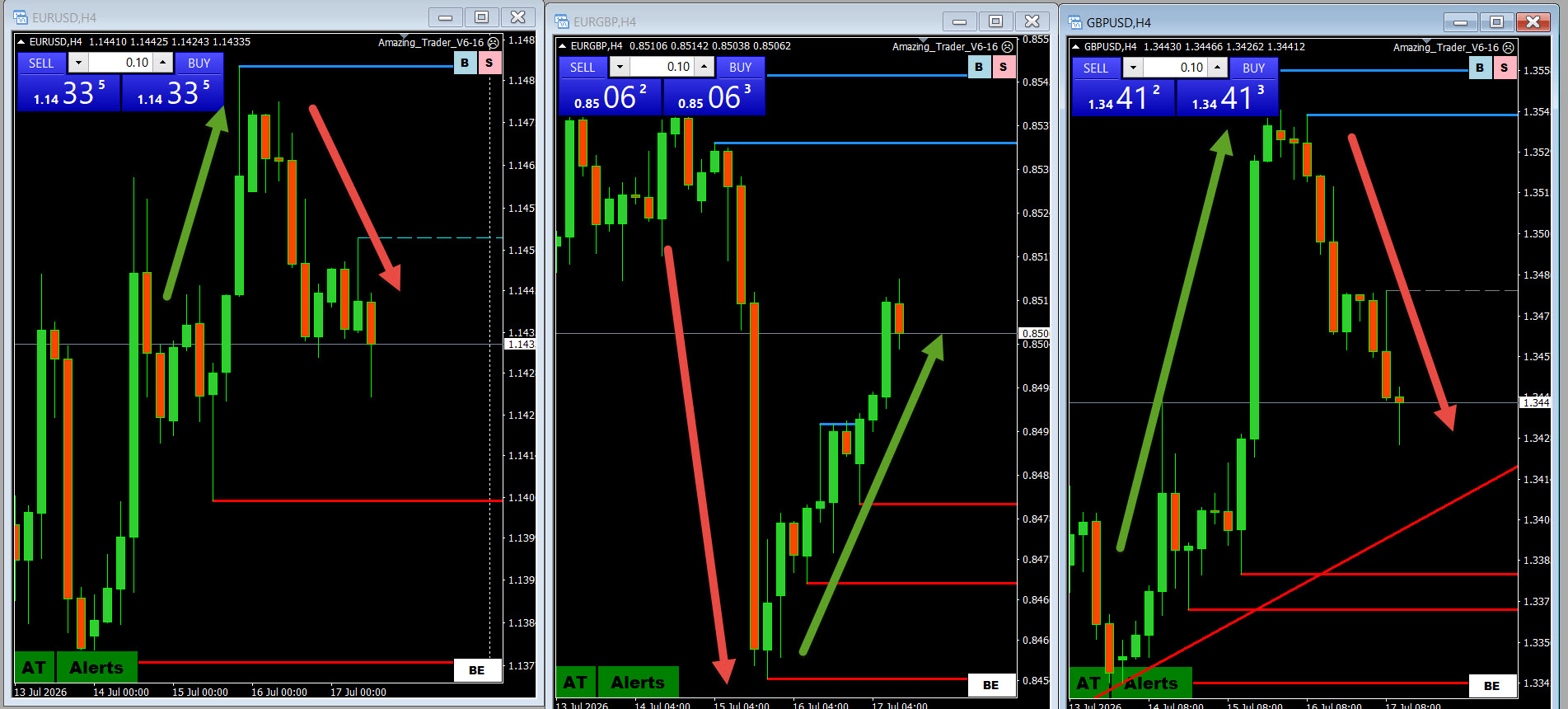
Next sequence is EURGBP bouncing, GBPUSD retreating and EURUSD again following with a lag as market is having more trouble absorbing the GBPUSD sell side of the cross.
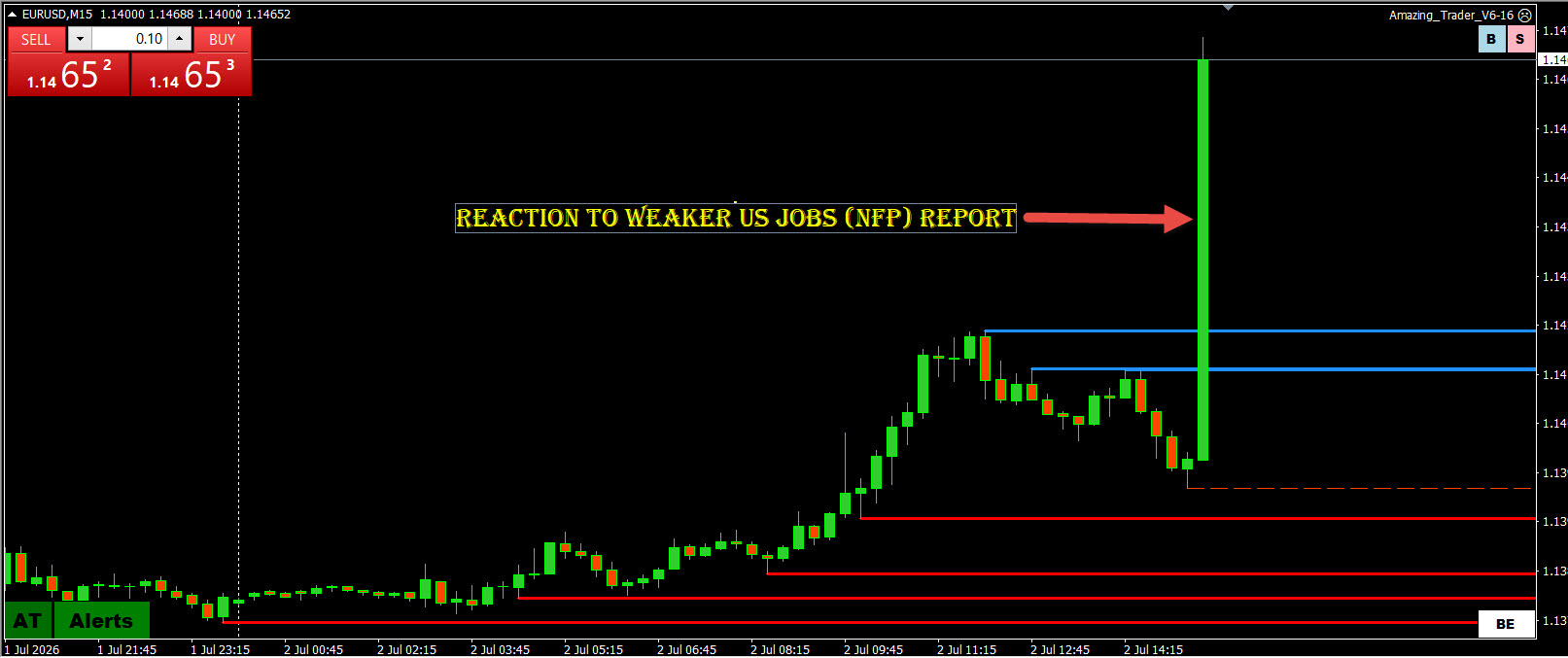
EURUSD EURGBP GBPUSD
Currency crosses provide valuable information that many retail traders ignore.
While they do not predict every market move, they often reveal where institutional money is flowing and which side of a transaction is having the greatest impact.
Rather than focusing solely on EURUSD or GBPUSD, consider adding the major crosses to your daily market analysis. Watching how these relationships develop can provide valuable confirmation, improve trade timing, and help you better understand the forces driving price action.
The next time you see EURGBP, EURJPY, or another major cross making a significant move, ask yourself:
Which currency is driving the move and which side of the trade is the market struggling to absorb?
The answer may provide your next trading opportunity.
Euro Dollar
Trading Blog
Daily Tips
Test Plugin
About author

Add comment