Santa Claus Rally vs the Fed: How to Trade December 2026
Every December, traders start talking about the Santa Claus rally. It’s one of the most famous patterns on Wall Street. This year, however, Santa has a problem. Before he gets to the chimney, he has to get past the Fed.
So here’s what history says, what’s different in 2026, and how to trade the holidays without getting burned.
What is the Santa Claus rally?
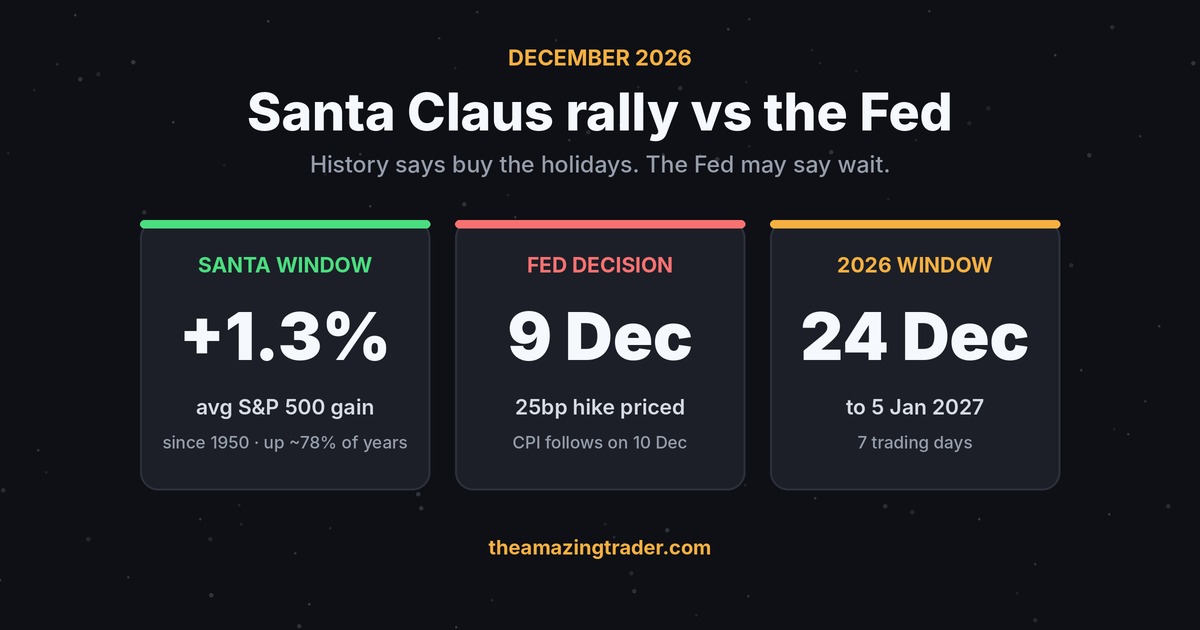
The name comes from Yale Hirsch, founder of the Stock Trader’s Almanac. He first spotted it in 1972. He defined it as the last five trading days of the year plus the first two trading days of January.
That makes it just seven days. Yet those seven days have a strong record. Since 1950, the S&P 500 has gained about 1.3% on average in this window. It has been positive in roughly 78% of years. By comparison, an average seven-day stretch returns only about 0.2%.
December as a whole is also kind to stocks. In fact, it has been one of the two best months for the S&P 500 since 1950.
Why does it happen?
Nobody knows for sure. Still, a few forces usually line up at year-end:
- Tax-loss selling ends. Investors dump losing stocks before year-end to cut their tax bill. Once that pressure stops, prices can bounce.
- Window dressing. Fund managers buy the year’s winners so their reports look good. As a result, strong stocks often get stronger into December 31.
- Fresh cash. Year-end bonuses and new-year pension flows put new money to work.
- Fewer sellers. Many big players are on holiday. So it takes less buying to push prices up.
- Holiday mood. Optimism tends to rise as the new year nears.
Why the 2026 Santa Claus rally faces the Fed
This year, the backdrop is far from festive. By mid-November the S&P 500 was down more than 3% for the month, as AI and tech stocks sold off. Meanwhile, the Fed has turned hawkish.
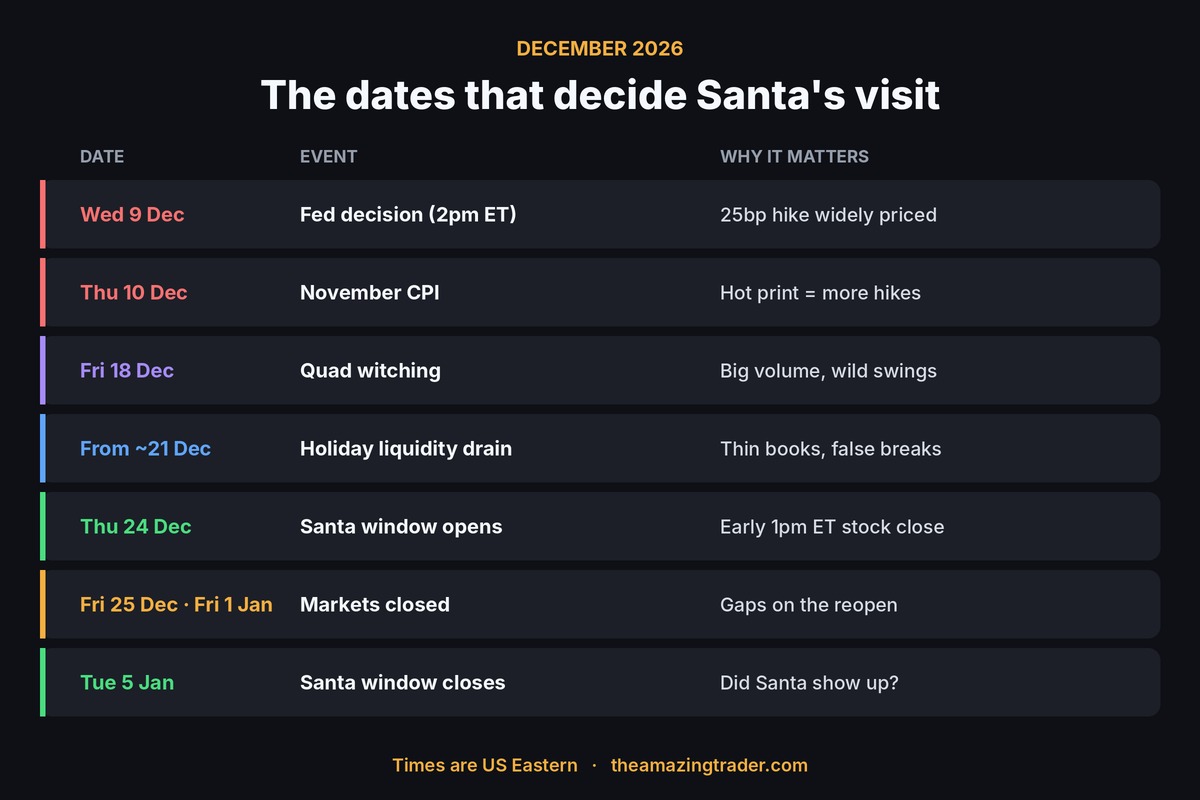
The Fed decides on Wednesday, 9 December. Markets see a quarter-point hike as very likely. You can follow those bets on the CME FedWatch tool. Then, just one day later, November CPI lands. A hot number could add more hikes to the 2027 picture.
In other words, the big December risk comes two weeks before Santa’s window even opens. If the Fed and CPI pass quietly, the seasonal tailwind has room to work. If not, Santa may arrive late, or not at all.
The December traps nobody talks about
Quad witching. On Friday, 18 December, stock options, index options and futures all expire together. Volume explodes, and prices can jerk around for no real reason.
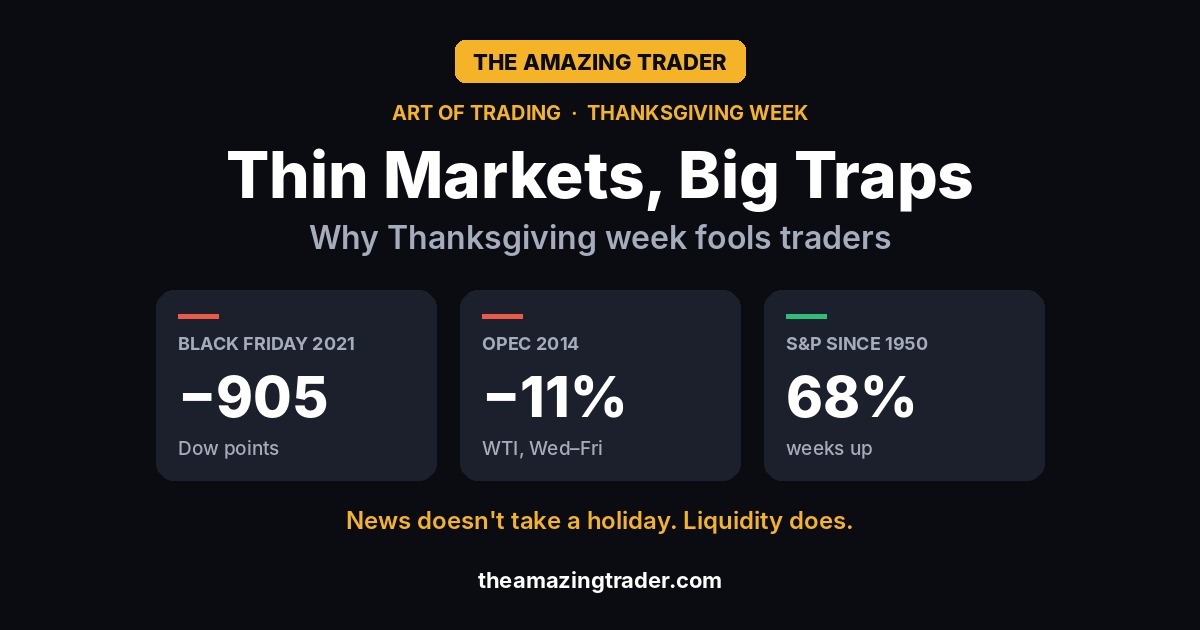
Thin liquidity. After that, trading desks empty out. With fewer orders in the book, a small trade can move price a long way. That’s how false breakouts and sudden spikes happen. We covered the same problem in Thin Markets, Big Traps, and late December is often worse.
Holiday gaps. US stock markets close early on 24 December and stay shut on Christmas Day and New Year’s Day. Check the NYSE holiday calendar before you plan. Forex and futures can also gap on the reopen, so read up on how to trade gaps.
Forex flash crashes. Thin holiday markets are where currency flash crashes tend to happen. For example, USDJPY and other yen pairs collapsed in minutes on 3 January 2019, in the thin Asian session.
How to trade the Santa Claus rally
- Treat it as a tailwind, not a signal. Seasonality tilts the odds. It doesn’t replace your chart.
- Get past the Fed first. Let 9 and 10 December play out before you lean on the seasonal pattern.
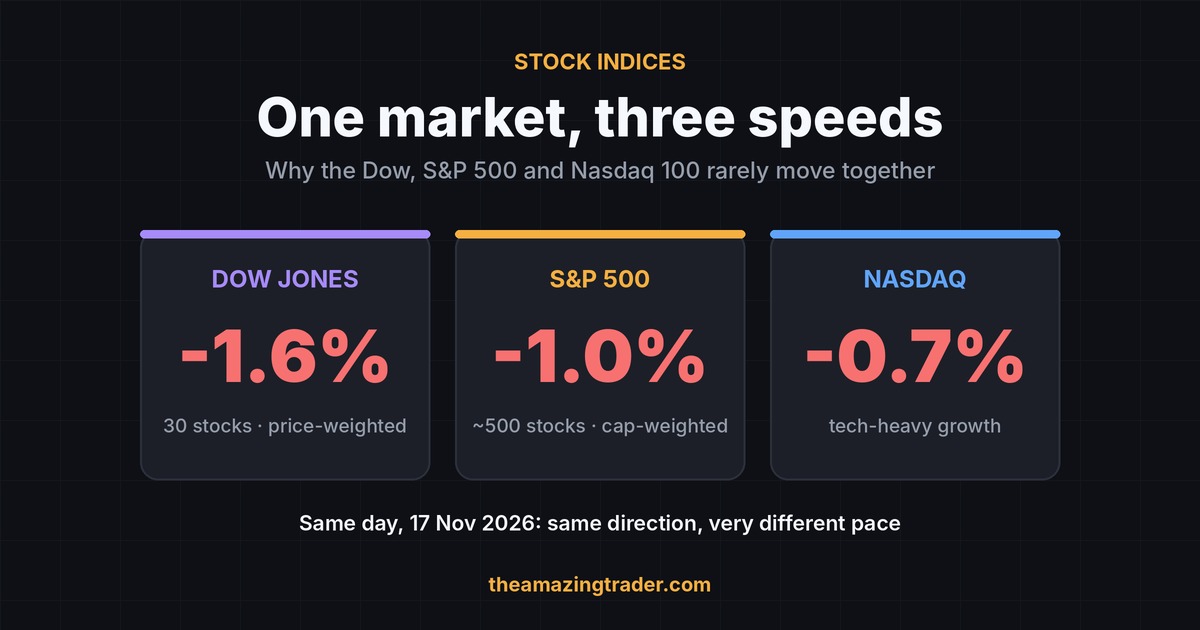
- Watch the leaders. If the Nasdaq leads the S&P 500 higher, risk appetite is back. If only the Dow rises, the rally is defensive. Our guide to why stock indices move at different speeds explains how to read that.
- Cut your size. Thin markets mean bigger slippage. Therefore, trade smaller than usual and widen stops only if you also cut size.
- Respect the holidays. Don’t hold big positions over the closures unless that’s part of your plan.
- Know when to stop. Many pros simply close the books in late December. Sitting out is a position too.
Above all, follow your risk management rules. They matter even more when liquidity disappears.
What if Santa doesn’t show up?
There’s an old line from the Almanac: “If Santa Claus should fail to call, bears may come to Broad and Wall.” A missing Santa Claus rally has sometimes come before a weak new year. However, it’s a warning light, not a forecast. Plenty of years broke the pattern both ways.
So if stocks fall in the window, don’t panic. Instead, take it as one more piece of the trading puzzle and check what the other pieces say.
The bottom line
The Santa Claus rally is real enough to respect, but it’s no gift you can count on. This year, the Fed and CPI come first. Then thin markets make every move bigger than it looks.
Trade smaller, trade with your levels, and let the season work for you, not against you. Our Daily Tips will follow every step of the December run.
Want clear trend signals when the holiday noise gets loud? See how The Amazing Trader can help.


About author