Thin Markets, Big Traps: Why Thanksgiving Week Fools Traders
Every year, Thanksgiving week trading looks easy on paper. The US takes Thursday off, Friday is a half-day, and most big players leave early. Yet some of the market’s nastiest surprises have come in exactly this week. Here is why the quiet week is often the one that hurts.
The calendar is usually kind
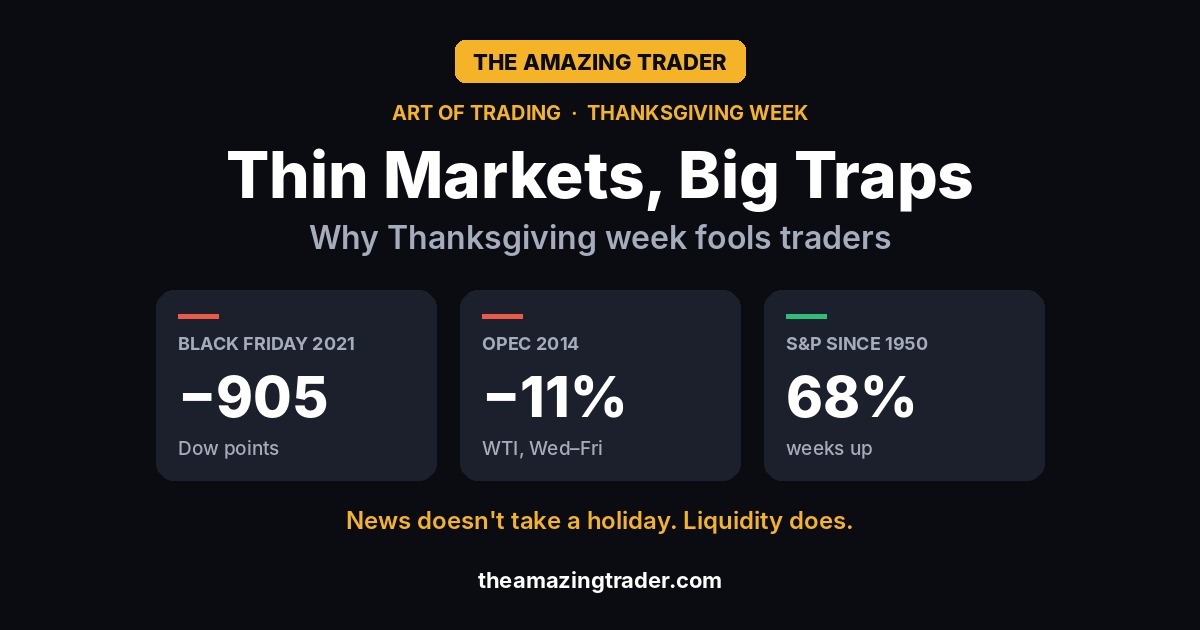
History leans bullish. Since 1950, the S&P 500 has risen in about two out of three Thanksgiving weeks. The Stock Trader’s Almanac first flagged the “holiday spirit” pattern back in 1987. It found that the Wednesday before and the Friday after were the strongest days.
However, the edge has faded since then. The Wednesday and Friday trades are not as reliable as they once were. So treat seasonality as a tailwind, not a trading plan.
When the quiet week turned loud
Three examples show how fast things can change.
Black Friday 2021. News of the Omicron variant hit while the US was at the Thanksgiving table. On Friday, the Dow fell 905 points in a shortened session. It was the worst post-Thanksgiving day since 1931. Oil dropped 13% the same day. Traders said thin volume made the fall worse. Then, on Monday, buyers came back and stocks bounced.
OPEC, Thanksgiving Day 2014. OPEC met in Vienna on Thursday and refused to cut output. US markets were shut, so the first reaction came in thin trade. By Friday, WTI had crashed to $66, down 11% from Wednesday. In this case, the holiday move was only the start of a much bigger slide.
Dubai, Black Friday 2009. Dubai World threatened to default on $26 billion of debt. The news broke over the holiday, and it made for one of the most brutal Black Fridays on record.
The lesson is the same each time. News does not take a holiday, but liquidity does.
Why thin markets make Thanksgiving week trading tricky
Fewer players means fewer orders on each side. As a result, a normal-size trade can move price much more than usual. Spreads widen. So stops get hit more easily than in a busy week.
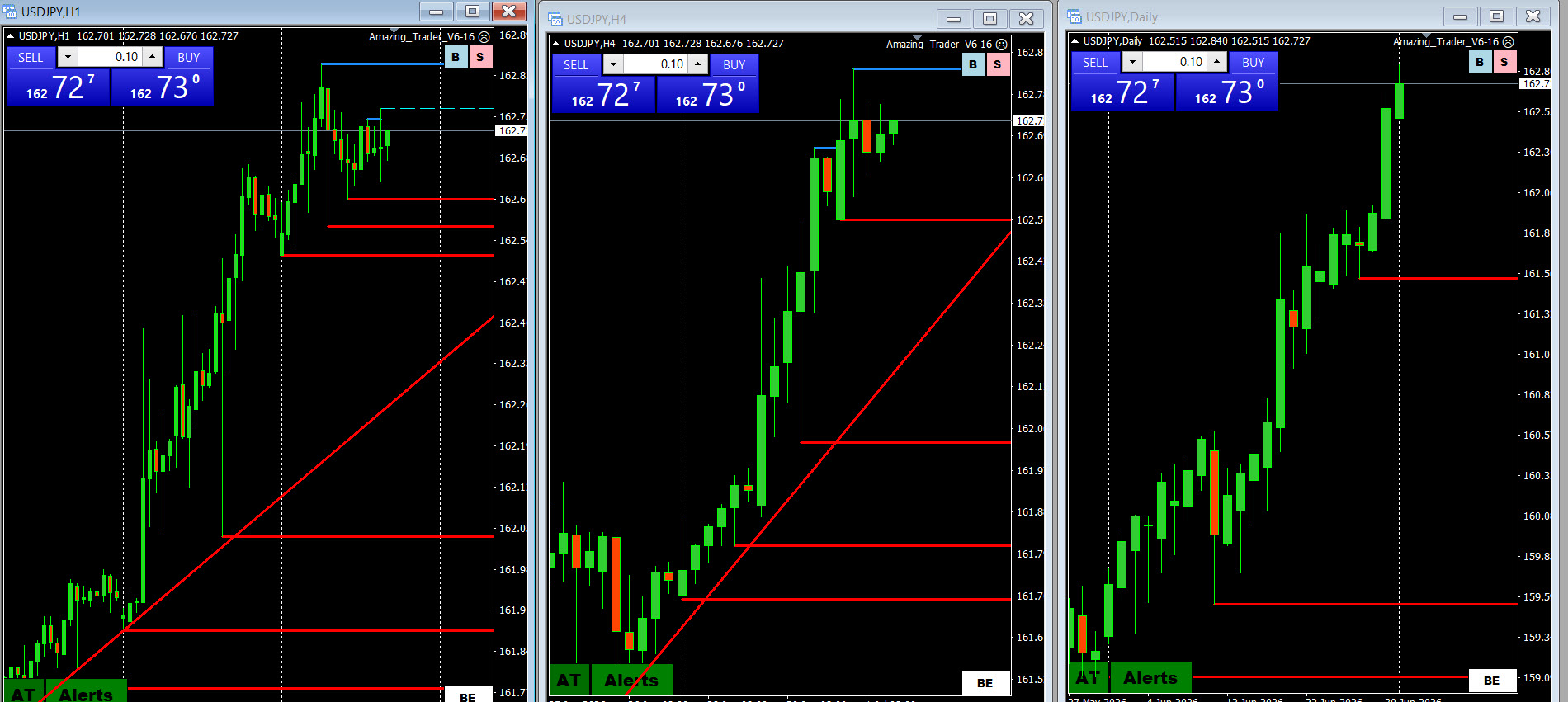
Forex adds a twist. The FX market never closes on Thursday. London, Tokyo and Sydney still trade, but the US desks that usually supply depth are gone. That’s when strange spikes can appear, even in major pairs like USDJPY.
Algorithms also play a part. With fewer people watching, a fast program can push price through a level. Then, once real volume returns on Monday, the move often reverses.
How to handle Thanksgiving week trading
- Trade smaller. Cut your usual size by half if you trade at all on Thursday or Friday.
- Don’t trust Friday breakouts. A break on thin volume needs confirmation. Wait for Monday, and check the bigger picture first, as in drill down trading.
- Watch the spread. Check it before every order. It can widen fast in quiet hours.
- Know the calendar. This year, almost all US data lands on Wednesday, including PCE. Our Daily Tips cover the key levels each day.
- Keep stops away from obvious levels. Thin markets love to hunt them.
- Plan for news over the long weekend. Ask yourself what you’d do if a headline hit while you were away. Our guide to opening week gaps shows how to handle the reopen.
The bottom line
Thanksgiving week trading is often calm and often green. But when it goes wrong, it goes wrong fast, and with few buyers or sellers to cushion the move. The best trade may be patience. Let the half-day pass, and let Monday show you what’s real.
Want a clearer read on quiet, tricky markets? See how The Amazing Trader can help.
About author