The Trading Puzzle: 7 Pieces, and You’ll Never Have Them All
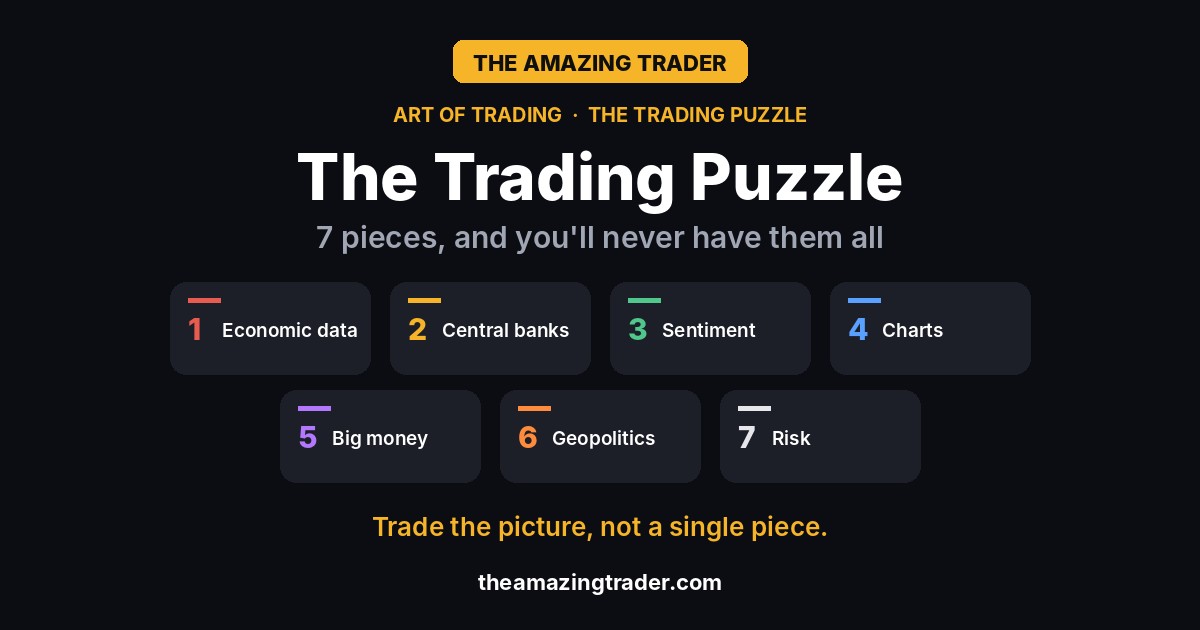
Trading is a puzzle with hundreds of pieces. Worse still, the pieces keep changing shape while you work. No single piece shows you the whole picture. So the real skill is not predicting prices. Instead, it is solving the trading puzzle fast enough to act before the market makes its next move.
Here’s the catch, though. You will never have every piece. The traders who last are the ones who learn to trade anyway.
Last week, one market solved the trading puzzle two ways
Take the week to 13 November. The Nasdaq rose about 2%. Bitcoin, which often follows tech stocks, fell more than 12%. So what happened?
Traders who only looked at stocks saw a healthy bounce. Meanwhile, the bond market was telling a different story. US yields jumped, the dollar hit a 19-month high, and traders began to price Fed rate hikes. In other words, the central-bank piece had changed. Anyone who missed it got caught on the wrong side.
That is the trading puzzle in one week. The pieces were all there. Most people just looked at one.
The 7 pieces of the trading puzzle
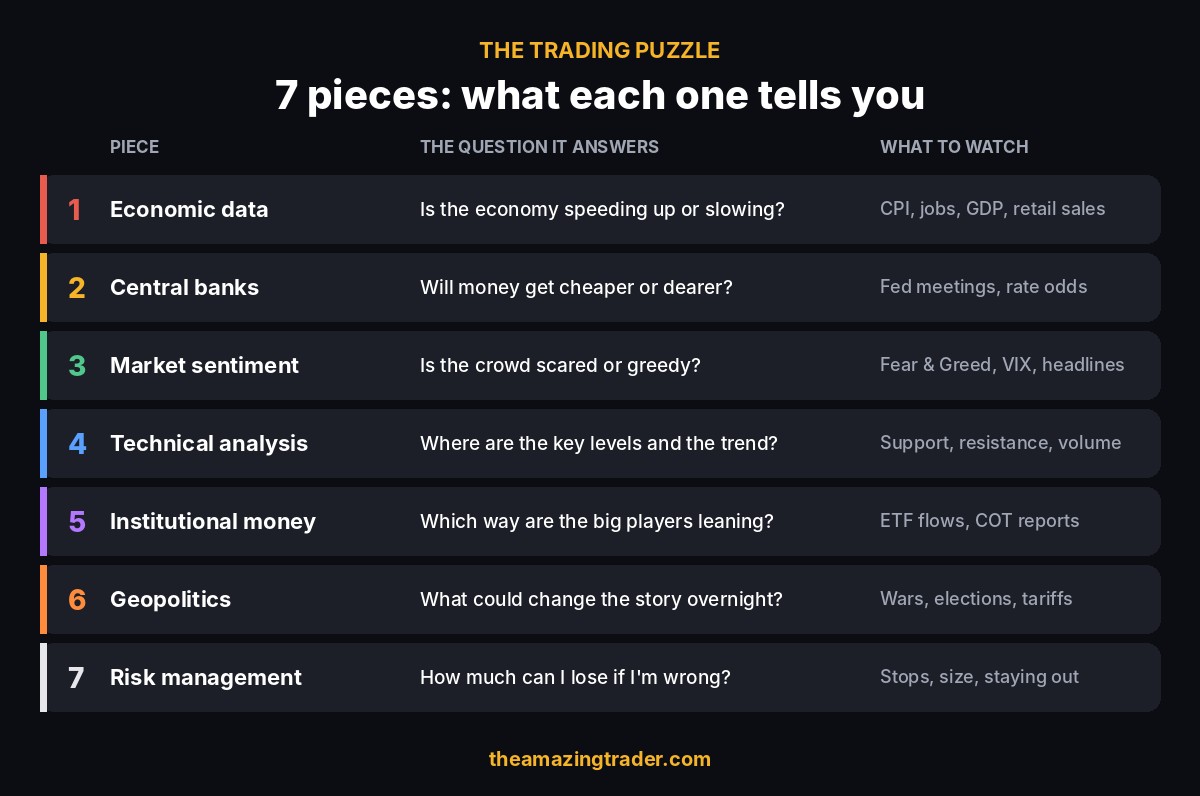
1. Economic data. Inflation, jobs, GDP and consumer spending show how healthy the economy is. Yet the number itself matters less than the surprise. A hot CPI print can move markets more than a strong one that everyone expected. Keep the CPI release calendar handy.
2. Central banks. The Fed sets the price of money. And that price touches everything: stocks, bonds, currencies, gold and crypto. Markets also move on what the Fed might do next. You can follow those bets on the CME FedWatch tool.
3. Market sentiment. Fear and greed can push prices far from what the fundamentals say. For example, extreme fear often shows up near bottoms, not tops. The CNN Fear & Greed Index is a quick way to check the mood.
4. Technical analysis. Charts show where buyers and sellers have fought before. Trends, support, resistance and volume help you find entries and exits. Start with the big picture first, then zoom in, just as we do in drill down trading.
5. Institutional money. Banks, hedge funds and asset managers move size. As a result, their flows can push a market for days. The CFTC’s weekly Commitments of Traders report shows how the big players are positioned.
6. Geopolitics. Wars, elections, tariffs and surprise headlines can flip the picture overnight. You can’t predict them. However, you can make sure one headline doesn’t wipe out your account.
7. Risk management. This is the piece that holds the others together. Even when the trading puzzle looks solved, the market can surprise you. So decide your stop, your size and your exit before you enter. Our 10 rules of risk management are a good place to start.
Why one piece is never enough
Most losing trades come from falling in love with a single piece. For instance, a trader sees a perfect chart pattern and ignores a Fed meeting the next day. Or someone buys a great company just as the whole market turns risk-off.
The pieces also don’t carry the same weight every week. Before a big jobs report, economic data leads. During a war scare, geopolitics takes over. Then, in quiet holiday weeks like this one, thin liquidity can make the chart lie. Part of the skill is knowing which piece matters most right now.
How to work the trading puzzle every day
- Start with the calendar. Know which data and central-bank events are due before you plan a trade.
- Check the price of money. Look at yields and the dollar. If they move hard, everything else will feel it.
- Read the mood. Is the crowd scared or greedy? Extremes often mean the move is late.
- Find your levels. Mark support and resistance on the higher time frames first.
- Look for agreement. The best trades come when three or four pieces point the same way.
- Size for the missing pieces. Because you never see the full picture, keep risk small enough to be wrong.
- Get a daily head start. Our Daily Tips pull the key pieces together for you every day.
You don’t need every piece to trade
Waiting for a complete picture is a trap. By the time every piece is clear, the move is usually over. Good trading means acting on probabilities, not certainty. Fit together enough pieces to give yourself an edge. Then protect yourself against the ones you can’t see.
After all, the market isn’t hiding the answer from you. It just never hands you the whole box. As we say in The Market Isn’t Your Enemy, your job is to read it, not fight it.
Want help seeing more of the picture at once? Find out how The Amazing Trader puts the key pieces on one chart.

About author