
Mastering Risk Management
Risk management
Why Every Trader Needs a Risk Management Plan
Every successful trader eventually learns the same lesson: protecting your capital is more important than making your next winning trade.
Markets can change direction in seconds. A surprise central bank announcement, geopolitical event, or unexpected headline can trigger violent price swings that catch even experienced traders off guard. When that happens, your ability to survive depends less on your market analysis and more on your risk management strategy.
Whether you’re trading forex, stocks, commodities, cryptocurrencies, or a funded prop trading account, risk management is your first and last line of defense.
Stop Loss Orders: Your Safety Net But Not a Guarantee
One of the most important tools available to traders is the stop loss order.
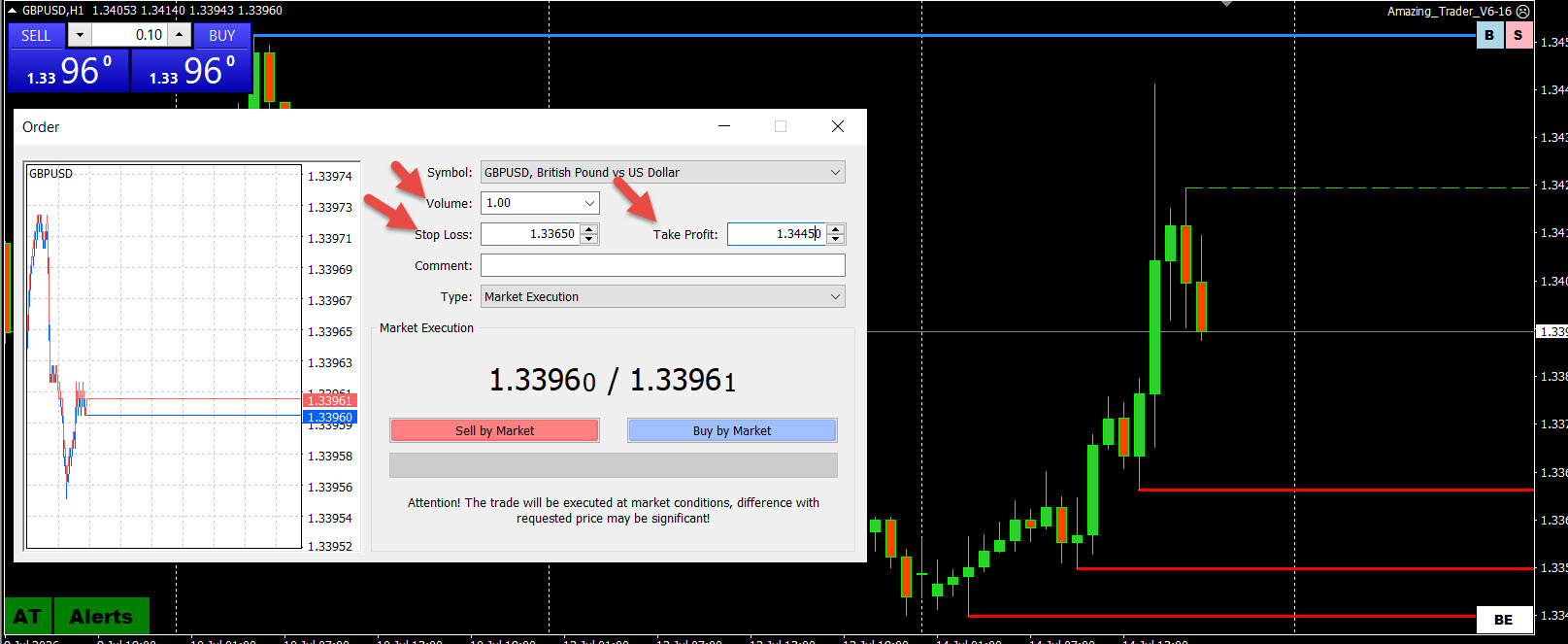
A stop loss automatically closes a losing position once price reaches a predetermined level. If you’re long, it becomes a sell order. If you’re short, it becomes a buy order.
Its purpose is simple: limit losses before they become catastrophic.
Think of a stop loss like an insurance policy. Most of the time it performs exactly as intended.
The problem is that, like any insurance policy, there are situations where it cannot fully protect you.
Understanding those situations is an essential part of becoming a professional trader.
The Two Fastest Ways to Blow Up a Trading Account
Many traders fail for different reasons, but two mistakes appear repeatedly:
- Trading without a stop loss.
- Using excessive leverage.
Individually, either mistake can damage an account.
Combined, they can be devastating.
Without a stop loss, losses can grow far beyond what was originally intended. Add high leverage, and even a relatively small market move can wipe out weeks or months of profits in minutes.
When a Stop Loss Doesn’t Stop the Loss
Many newer traders assume that placing a stop loss guarantees they’ll exit at the exact price they selected.
Unfortunately, markets don’t always work that way.
During periods of extreme volatility, prices can move so quickly that your order cannot be executed until the next available price.
This phenomenon is known as slippage.
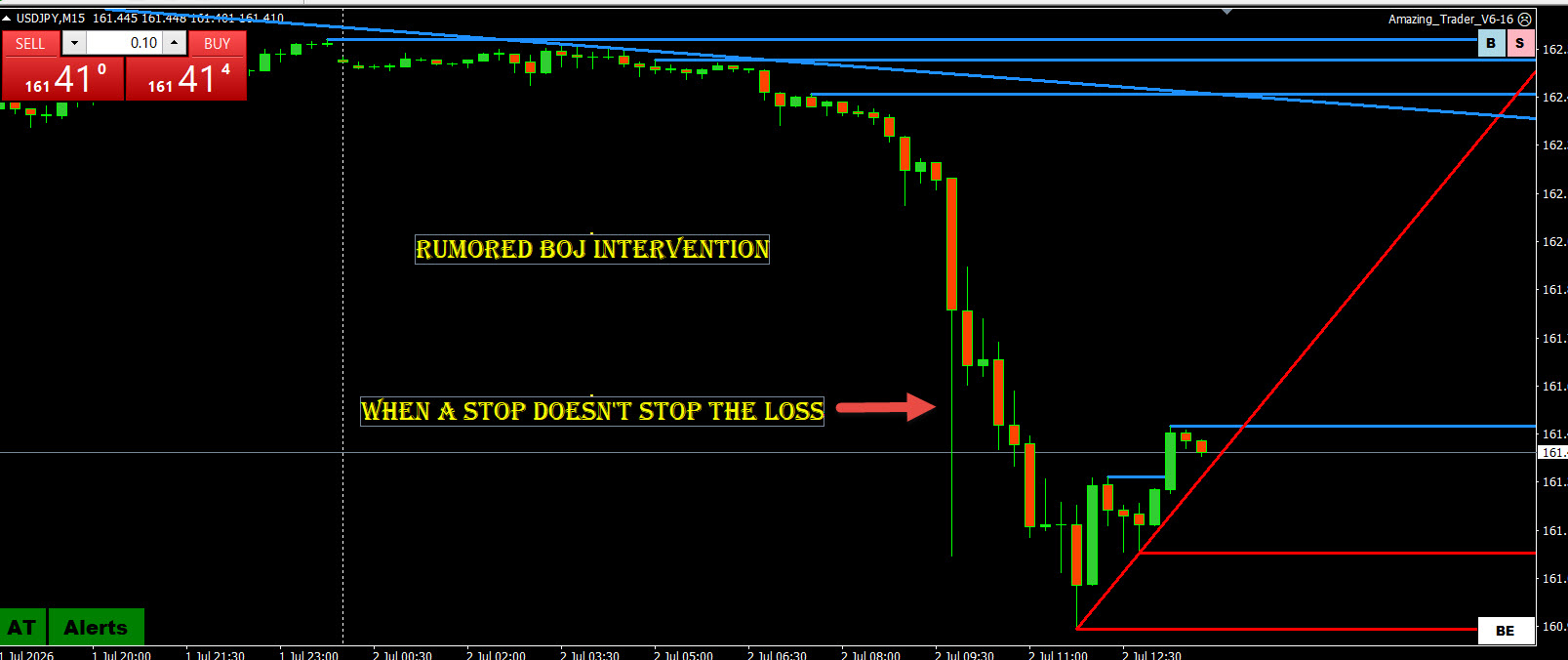
For example, you may place a stop loss designed to limit your risk to 10 pips. Instead, a sudden news event causes the market to gap through your stop, and your position is filled 40 or 50 pips away.
Your stop worked but not at the price you expected.
Risk management
USDJPY: Rumorwed BoJ intervention
Risk management
Why Slippage Happens
Several market conditions can cause stop-loss orders to execute at worse-than-expected prices.
Extreme Market Volatility
Major economic reports, central bank announcements, geopolitical developments, and unexpected headlines can trigger explosive price movements.
When buy or sell orders flood the market simultaneously, prices may jump from one level to another without trading at every price in between.
Thin Liquidity
During quieter trading periods, such as late Friday sessions, Sunday market opens, or holidays there may not be enough buyers or sellers available at your stop price.
Your order is then filled at the next available market price.
Market Gaps
Markets occasionally open significantly above or below the previous closing prices, known as a gap..
When this occurs, your stop-loss level may never actually trade, forcing your order to execute at the first available price after the gap.
Real-World Market Shocks
History provides countless examples of markets moving far faster than traders anticipated.
Unexpected political announcements, surprise central bank decisions, military conflicts, flash crashes, surprise currency intervention and major economic releases have all produced violent price swings that overwhelmed stop-loss orders.
Long candlestick wicks, sudden spikes, and sharp reversals often reveal where stop-loss orders were triggered as liquidity temporarily disappeared.
These events are relatively uncommon, but every trader should assume they will happen again at some point.
The question isn’t if another market shock will occur. It’s whether your account can survive when it does.
Why Overleveraging Makes Everything Worse
Leverage is one of the greatest advantages available to traders.
It also represents one of the greatest risks.
Used responsibly, leverage allows traders to control larger positions while committing less capital.
Used recklessly, it magnifies every mistake.
If slippage causes your loss to exceed your planned risk, excessive leverage can quickly transform a manageable loss into a devastating one.
For traders participating in proprietary trading firm evaluations, a single slippage event may be enough to violate maximum daily loss or overall drawdown rules, even if the original trade setup was sound.
The lesson is simple:
The larger your position, the less room you have for unexpected market events.
Risk Management Goes Beyond Stop Losses
Many traders mistakenly believe that using a stop loss means they have properly managed risk.
A stop loss is only one component of a complete risk management plan.
Professional traders also consider:
- Position size
- Percentage of account risked per trade
- Maximum daily loss
- Overall portfolio exposure
- Correlation between positions
- Upcoming economic news and market events
- Market liquidity
Every one of these factors determines whether a trader can survive periods of abnormal market volatility.
Practical Ways to Protect Your Trading Capital
No strategy can eliminate risk entirely, but you can significantly reduce your exposure by following sound risk management principles.
- Always trade with a stop loss, while understanding it is not guaranteed to execute at your exact price.
- Keep position sizes small enough that unexpected slippage won’t seriously damage your account.
- Avoid excessive leverage, particularly around major economic releases or central bank announcements.
- Monitor the economic calendar and be aware of events capable of creating exceptional volatility.
- Consider reducing exposure ahead of high-impact news if the potential reward doesn’t justify the additional risk.
- Focus on protecting your trading capital before thinking about profits.
The bottom line is that stop loss remains one of the most valuable tools available to traders, but it should never be viewed as a guarantee.
Markets can gap. Liquidity can disappear. Prices can move faster than any order can be executed.
That’s why experienced traders don’t rely solely on stop-loss orders. Rather, hey build their entire trading plan around risk management.
Successful trading isn’t about avoiding losses altogether. Losses are inevitable.
The objective is to make sure no single trade, unexpected headline, or market shock has the power to end your trading career.
At the end of every trading day, the most important question isn’t whether you made money.
It’s whether you’ve managed your risk well enough to be ready for tomorrow’s opportunities.
Risk management
Daily Tips
Forex Forum
Test Plugin
About author

Add comment