
How to Create a Forex Trading Plan
Action Plan
A well-designed trading plan is one of the most important tools a forex trader can have. Whether you are a beginner or an experienced market participant, a trading plan provides structure, consistency, and discipline. Its primary purpose is to serve as a roadmap for your trading activities, helping you make objective decisions and react quickly to changing market conditions.
Without a plan, traders often fall victim to emotional decision-making, which can lead to costly mistakes. A solid trading plan helps eliminate uncertainty and keeps your focus on the process rather than short-term results.
Why Every Forex Trader Needs a Trading Plan
The forex market moves quickly, and traders are often required to make decisions in real time. Having a predefined set of rules and guidelines allows you to act decisively without overanalyzing every market movement.
A trading plan should answer key questions such as:
- Which markets will you trade?
- How much risk will you take on each trade?
- What trading methods will you use?
- How will you evaluate your performance?
- What are your profit objectives?
The answers to these questions form the foundation of a disciplined trading approach.
Money Management: The Most Important Part of Trading
While traders may disagree on indicators, chart patterns, or market analysis techniques, most successful traders agree on one thing: money management is the cornerstone of long-term success.
Money management is both an art and a science. It involves controlling risk, preserving capital, and ensuring that no single trade can significantly damage your account.
Key money management considerations include:
- Maximum risk per trade
- Position sizing
- Stop-loss placement
- Overall account exposure
- Risk-to-reward ratios
Even the best trading strategy can fail without proper money management. Conversely, strong money management can help traders survive periods of poor performance and remain in the game long enough to succeed.
The Core Elements of a Trading Plan
A comprehensive forex trading plan should include several essential components:
-
Money Management Parameters
Define how much of your account you are willing to risk on any single trade and establish guidelines for maximum daily, weekly, or monthly losses.
-
Markets to Trade
Focus on a select group of currency pairs rather than trying to monitor every market.
Many traders begin with highly liquid pairs such as:
- EURUSD
- GBPUSD
- USDJPY
- AUDUSD
- USDCAD
Concentrating on a smaller number of markets allows you to become familiar with their behavior and characteristics.
Action Plan
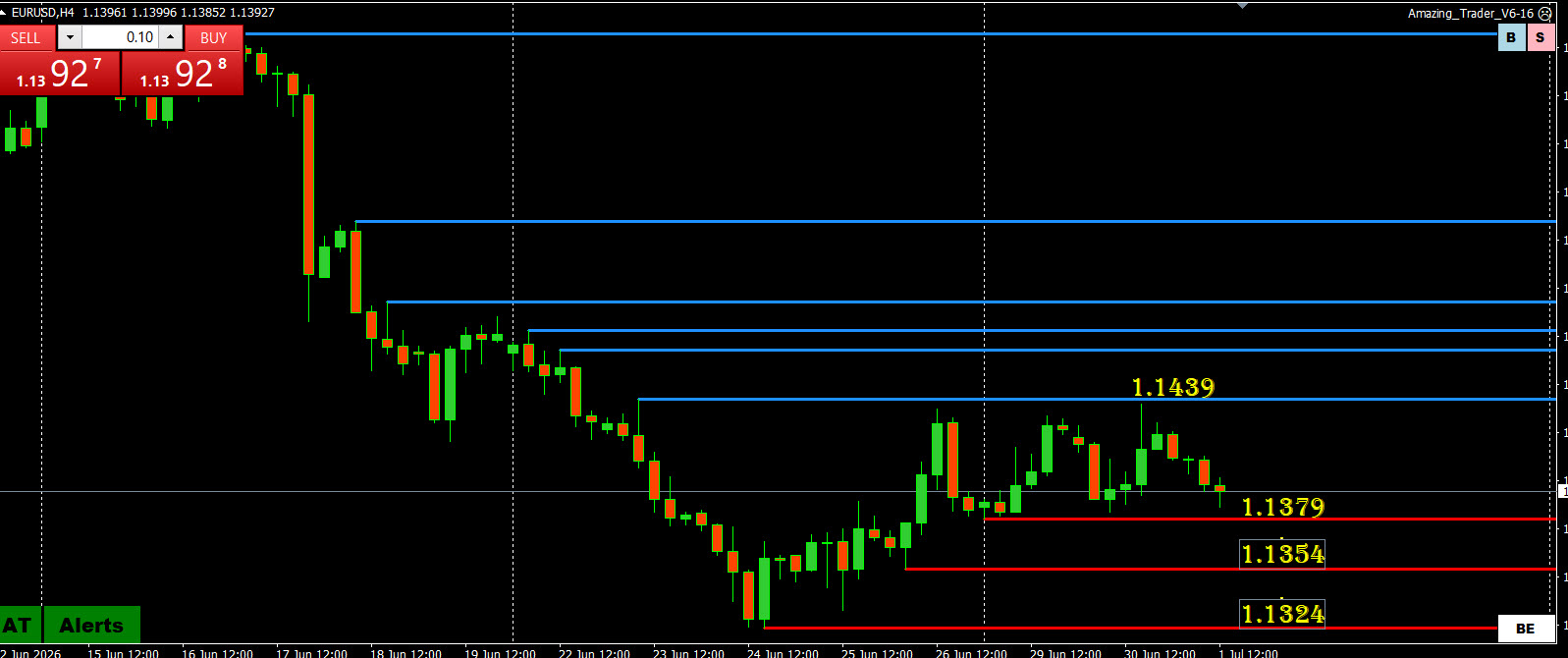
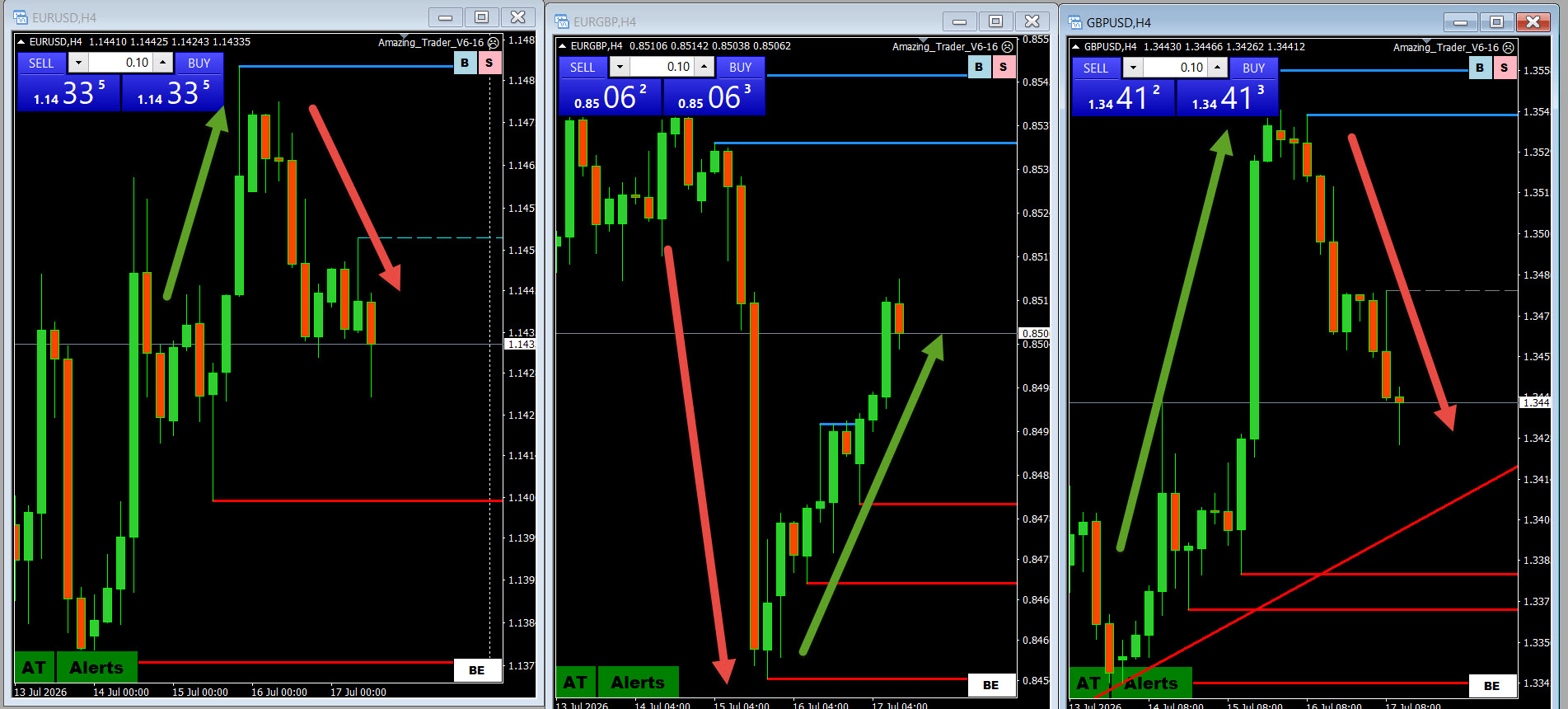
Amazing Trader EURUSD 4 Hour Chart
-
Trade Objectives and Risk Parameters
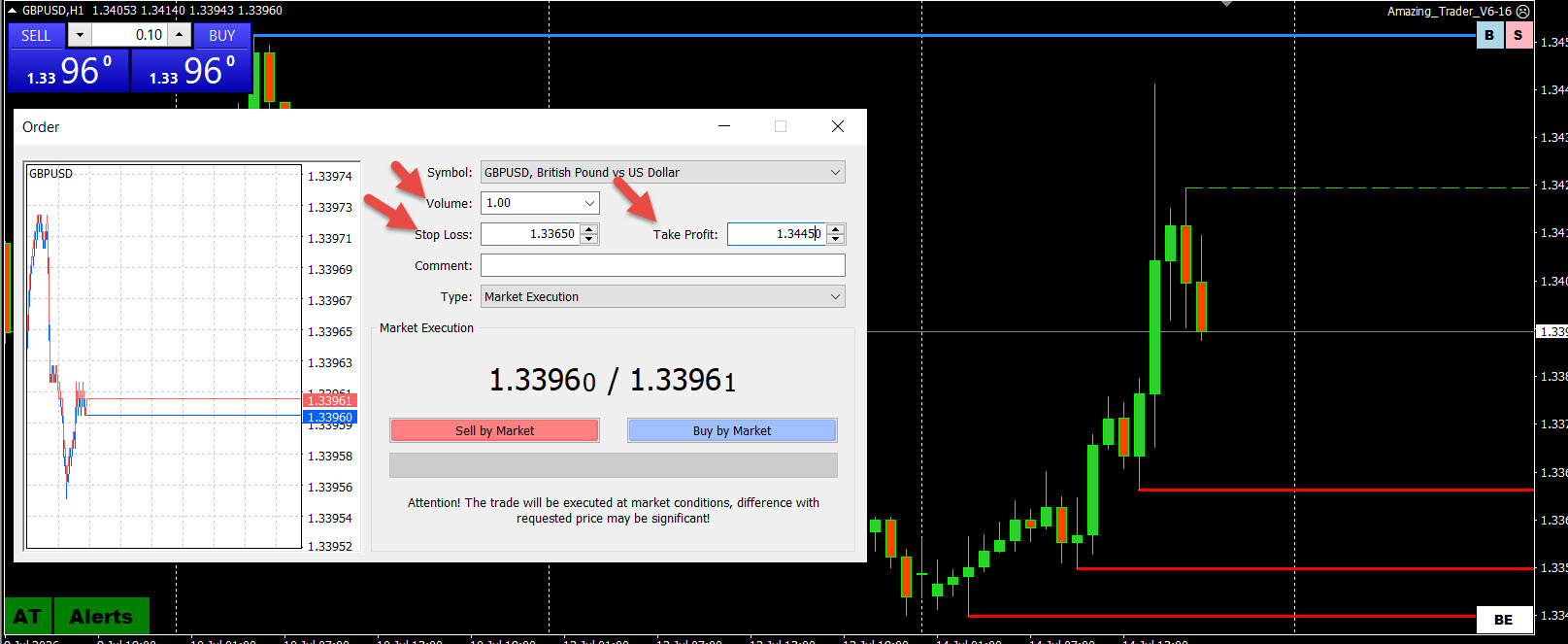
Every trade should have a clear objective and a predefined stop-loss level. Knowing both your potential reward and potential risk before entering a trade helps maintain discipline and consistency.
-
Trading Methodology
Your trading method should define:
- How you identify opportunities
- Entry criteria
- Exit criteria
- Risk management rules
- Trade management procedures
The simpler the methodology, the easier it is to follow and evaluate.
Keep Your Trading Method Simple
One of the biggest mistakes new traders make is trying to learn too many strategies at once.
Technical analysis offers an enormous range of tools and approaches. Hundreds of books and thousands of articles have been written on chart patterns, indicators, price action, and trading systems.
While professional traders often combine technical and fundamental analysis, beginners are usually better served by keeping their methods straightforward.
A simple trading method is easier to learn, easier to execute, and easier to improve over time.
Remember that successful trading is not about finding the perfect indicator. It is about consistently applying a method while controlling risk.
Action Plan
The Role of Psychology in Forex Trading
Fear and greed are the two emotions that drive financial markets.
Every trader experiences them, but successful traders learn how to manage them effectively.
A trading plan helps reduce emotional decision-making by creating predetermined rules for entries, exits, and risk management.
When traders abandon their plans because of fear or greed, mistakes often follow.
Maintaining discipline and consistency is one of the most important factors in achieving long-term trading success.
Using a Trading Heuristic
A heuristic is a structured decision-making process that helps traders move from information to action.
In simple terms, it is a mental framework that guides analysis and decision-making.
Just as chess players use established thought processes to evaluate positions and make moves under time pressure, traders can use a heuristic to analyze markets and execute trades efficiently.
A trading heuristic may include:
- Market analysis
- Trade selection
- Entry criteria
- Risk assessment
- Exit management
- Trade review
Having a defined process reduces emotional interference and ensures that trades remain aligned with your overall strategy.
Diagnostics and Trade Postmortems
One of the most overlooked aspects of trading is performance evaluation.
Successful traders continually review and analyze their results in order to identify strengths and weaknesses.
A good trading plan should include a diagnostic process that reviews performance on:
- A daily basis
- A weekly basis
- A monthly basis
In addition, traders should conduct a brief postmortem after every completed trade.
Ask yourself:
- What went right?
- What went wrong?
- Did I follow my trading plan?
- Were there any avoidable mistakes?
The purpose of a postmortem is not to celebrate wins or dwell on losses. It is to learn from experience and make small improvements over time.
Incremental improvement is often more effective than making dramatic changes after a few trades.
Start with a Demo Account
Before risking real money, new traders should spend time using a demo account.
A demo account allows traders to become familiar with:
- Trading platforms
- Order execution
- Market behavior
- Risk management
- Trade planning
To sum up, practicing in a risk-free environment helps build confidence and develop good habits before transitioning to live trading.
A successful forex trading plan combines money management, risk control, trading methodology, and ongoing evaluation into a single framework.
The best plans are often the simplest. They provide clear guidelines while allowing traders to adapt to changing market conditions.
Forex markets move quickly, and leverage magnifies both opportunities and risks. Having a structured plan helps traders make decisions efficiently and avoid emotional reactions.
By focusing on discipline, simplicity, and continuous improvement, traders can build a solid foundation for long-term success in trading.
Action Plan
Daily Tips
Trading Blog
Test Plugin
About author

Add comment