
Fundamental Analysis in Forex
Trade Analysis
What Is Fundamental Analysis in Forex Trading?
Fundamental analysis in forex is the study of economic, political, and financial factors that influence the value of a country’s currency.
Instead of focusing only on charts and price patterns, fundamental traders look at the real-world forces behind price movements, such as economic growth, inflation, interest rates, and political stability.
At its core, fundamental analysis aims to answer a simple question:
Is a country’s economy strengthening or weakening (relative to others)?
The answer to that question often has a direct impact on the strength or weakness of its currency.
When economic conditions improve, a currency tends to appreciate. When conditions deteriorate, the currency often declines. How central banks respond to changing conditions has an impact on its currency.
What Drives Currency Fundamentals?
Fundamental analysis covers a wide range of economic and geopolitical factors. It is not limited to a single number or report but instead involves a broad view of a country’s overall economic health.
Traders may analyze:
- Economic growth and stability
- Central bank policies
- Political developments
- Inflation trends
- Employment data
- Fiscal conditions
- Global economic events
All of these factors combine to shape investor sentiment and currency valuation.
In forex trading, currencies are constantly being repriced based and expectations changed on new information entering the market.
Trade Analysis
Key Economic Indicators That Move the Forex Market
While fundamental analysis is broad, several key economic indicators consistently have the most influence on currency prices.
-
Interest Rates
Interest rates set by central banks are one of the most powerful drivers of currency value.
Higher interest rates generally attract foreign capital, increasing demand for a currency. Lower rates tend to weaken it.
Traders closely watch central bank decisions and forward guidance for clues about future policy direction.
-
Gross Domestic Product (GDP)
GDP measures the overall economic output of a country.
Strong GDP growth signals a healthy economy and often supports a stronger currency. Weak or declining GDP can signal economic slowdown and currency weakness.
-
Inflation Data
Inflation affects purchasing power and central bank policy.
Moderate inflation is normal, but excessive inflation can force central banks to raise interest rates, which often strengthens the currency in the short to medium term.
-
Employment Data
Employment figures, such as non-farm payrolls in the U.S., are closely watched indicators of economic health.
Strong job growth generally supports currency strength, while rising unemployment can weaken it.
Why Economic Data Comes in Different Forms
Fundamental data does not arrive in a single format. Instead, it is released through a variety of reports and announcements.
Examples include:
- Central bank interest rate decisions
- Inflation reports (CPI, PPI)
- Employment statistics
- Housing market data
- Manufacturing and services surveys
Each release adds another piece to the broader economic picture.
However, not all data has the same impact. Some reports are market-moving events, while others have only minor influence.
The “Priced In” Effect: Expectations Matter More Than Numbers
One of the most important concepts in fundamental analysis is that markets do not react only to the data itself but to the difference between expectations and reality.
Before any economic report is released, analysts and traders form a consensus forecast.
If the actual result matches expectations, the market reaction may be limited.
If the result is significantly better or worse than expected, the market can move sharply.
This is known as the expectation game.
For example:
- A strong jobs report that exceeds expectations can strengthen a currency quickly
- A weak report that falls short of forecasts can trigger rapid selling
The larger the surprise, the larger the potential market reaction.
Trade Analysis
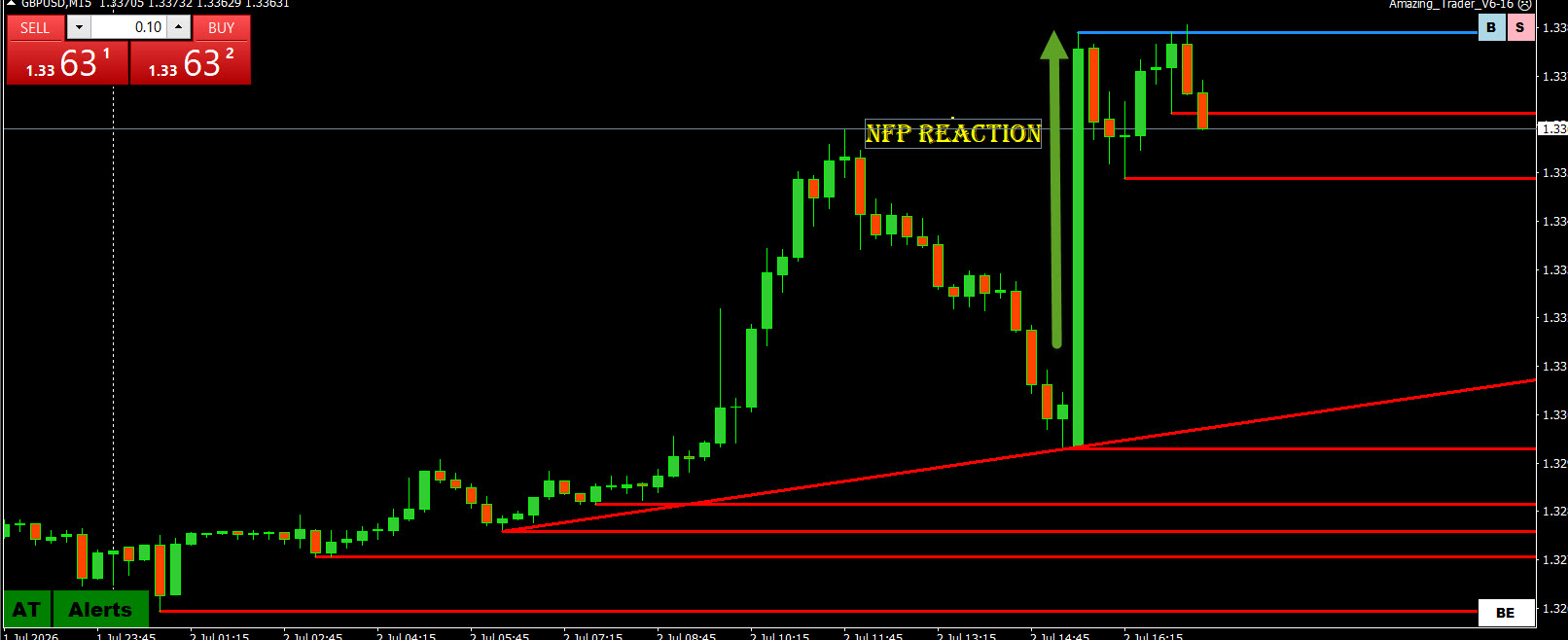
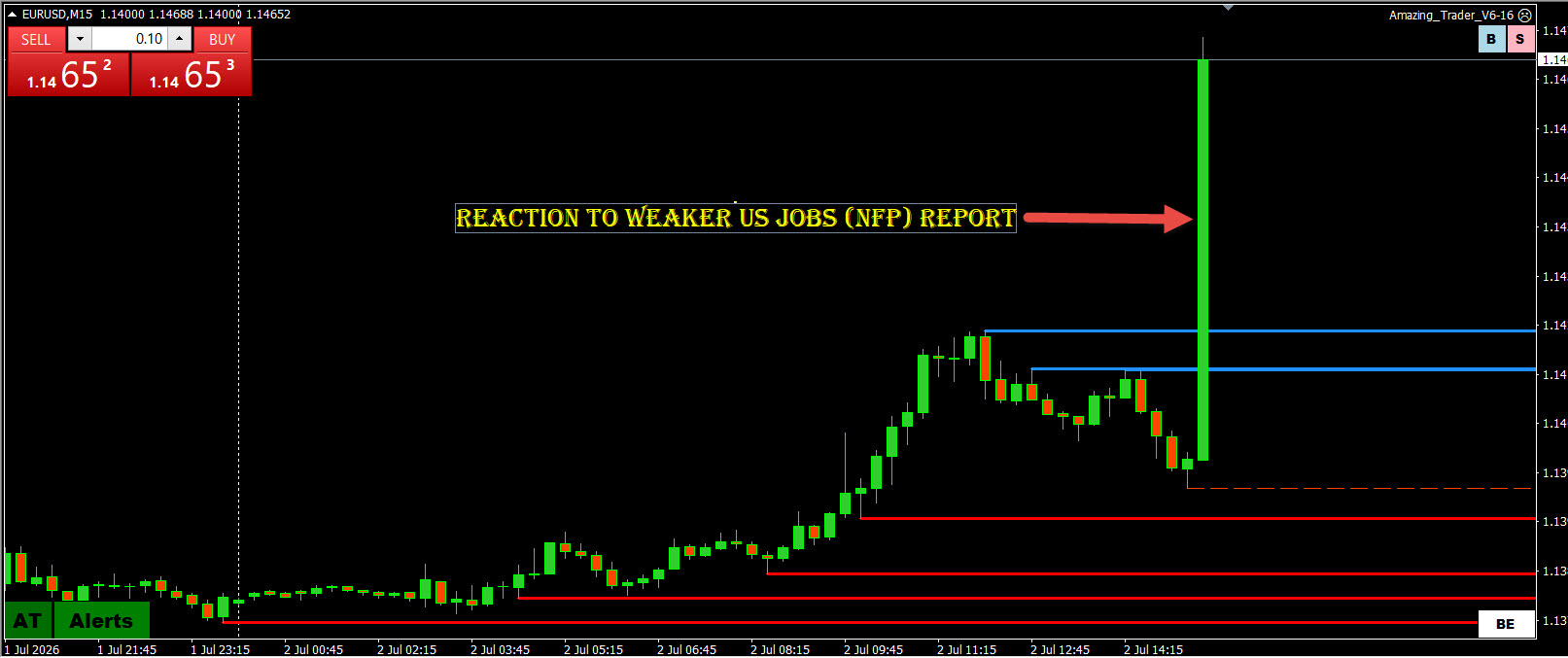
Juky 2 2026: June NFP missed (weaker) and markets reacted

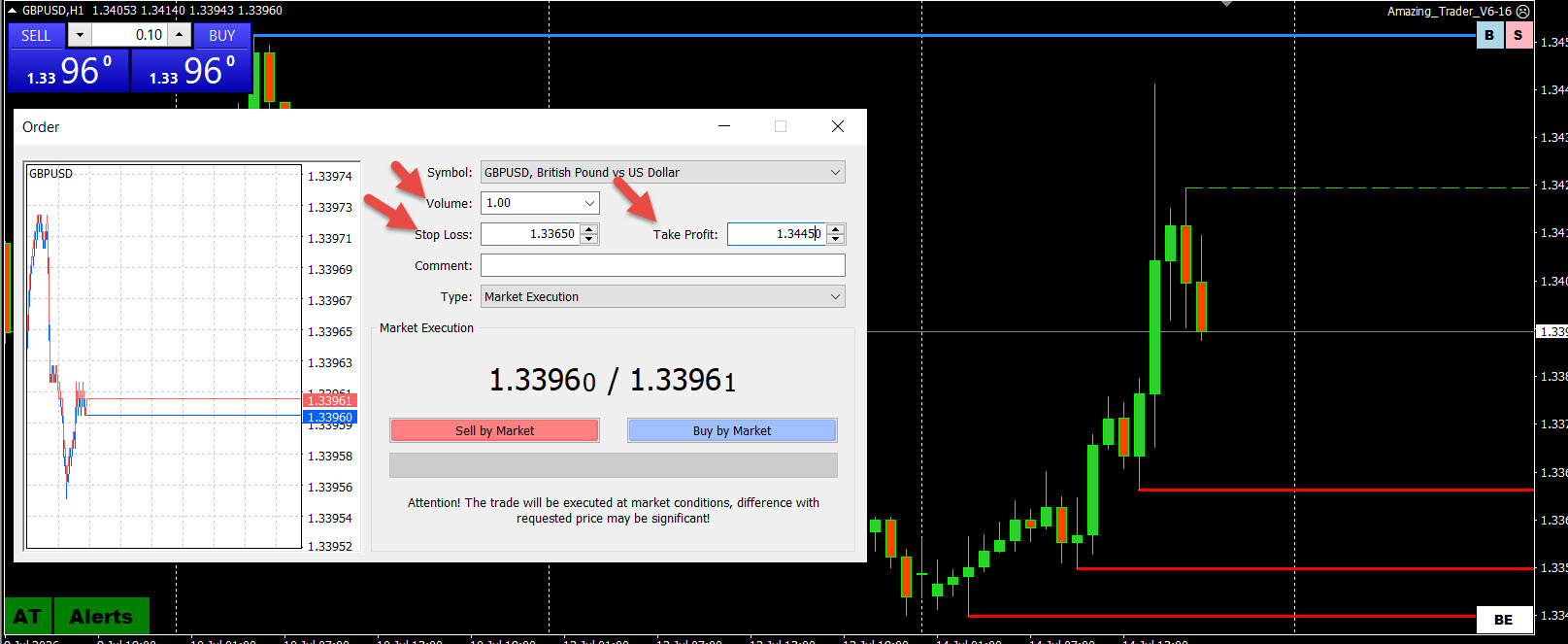
Illustration of market reaction spiked lower (e.g. GBPUSD spiked higher)
How Traders Should React to Economic Reports
A common question among newer traders is:
“What should I do after an economic report is released?”
The answer is not as simple as following the headline number.
Economic data alone is not enough to build a complete trading decision.
Instead, traders should understand that:
- Fundamentals provide context, not exact entry signals
- Markets often react before the data is released
- Price movement after news can be volatile and unpredictable
This is why experienced traders avoid relying solely on economic releases to make trading decisions.
Fundamental vs Technical Analysis: Which Is Better?
There is often debate about whether fundamental or technical analysis is more important.
In reality, both play different roles.
Fundamental Analysis
Best used for:
- Understanding long-term currency direction
- Identifying macroeconomic trends
- Assessing central bank policy outlook
Technical Analysis
Best used for:
- Timing entries and exits
- Short-term trading decisions
- Identifying support and resistance levels
- Managing risk
Short-term traders often rely more heavily on technical analysis, while longer-term traders pay closer attention to fundamentals.
The Best Approach: Combining Both Methods
Rather than choosing one method over the other, many successful traders combine both.
This hybrid approach allows traders to:
- Understand the broader economic environment
- Align trades with macro trends
- Use technical levels to refine entries
- Improve timing and risk management
For example, a trader might identify a fundamentally strong currency based on rising interest rates, then use technical analysis to find a low-risk entry point.
This combination creates a more complete and balanced trading strategy.
Using Fundamentals the Right Way
Fundamental analysis is a powerful tool in forex trading, but it should not be used in isolation.
Economic data helps explain why currencies move, but it does not always predict exactly when or how price will react.
Successful traders understand the relationship between:
- Economic fundamentals
- Market expectations
- Price action
By combining fundamental insight with technical precision, traders can build a more structured and informed approach to the markets.
Ultimately, the goal is not to rely on any single method but to develop a system that gives you a consistent edge in understanding market behavior.
Trade Analysis
Daily Tips
Forex Blog
Test Plugin
About author

Add comment