
Why Stop Loss Orders Are Essential in Trading
Day Trader
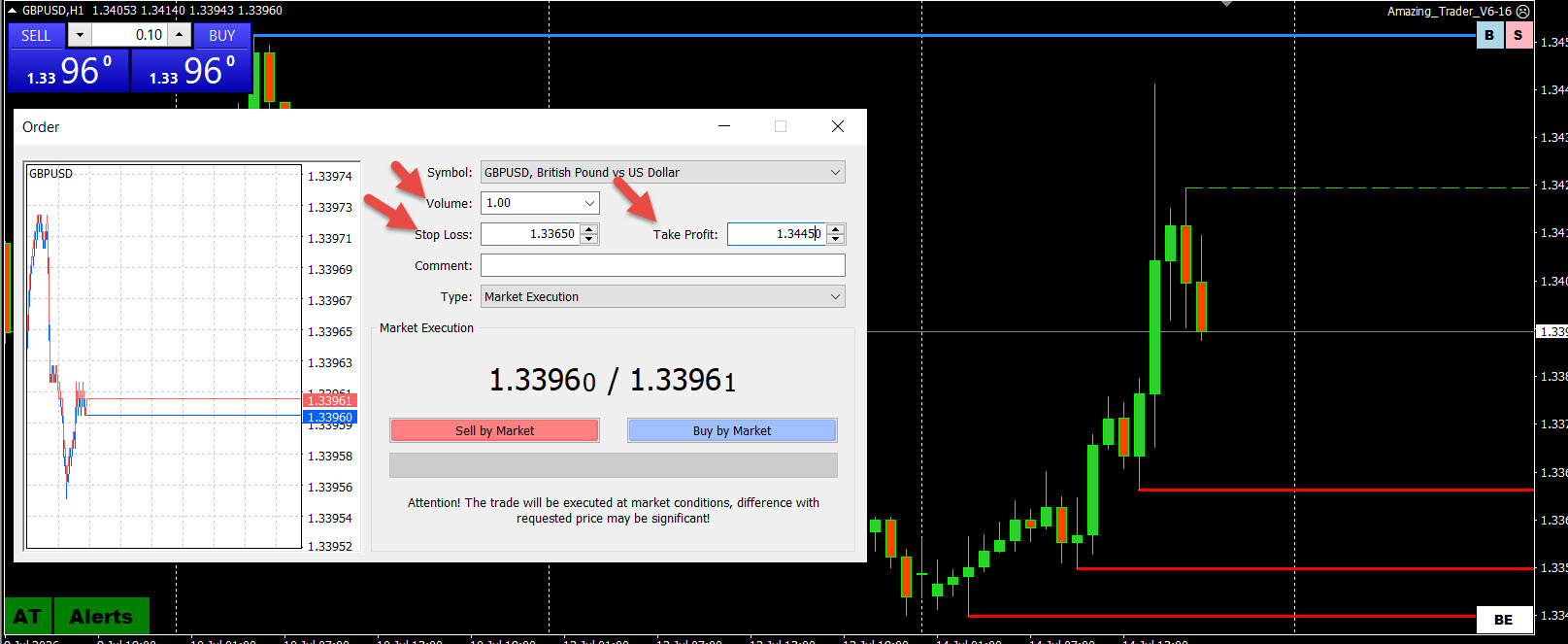
Stop loss orders are often described as a “necessary evil” in trading, but in reality, they are one of the most important tools for long-term survival in the markets.
The core principle of successful trading is simple: stay in the game long enough to take advantage of opportunities.
Think of stops as an insurance policy that protects the capital of your account not only for risk management purposes but from an unexpected event.
Without a stop loss, every trade becomes exposed to unlimited risk. A single unexpected news event, central bank surprise, or geopolitical shock can turn a manageable position into a catastrophic loss.
Even more dangerous is the emotional trap traders fall into when they avoid using stops. Instead of accepting a loss, they may double or triple down in hopes of recovering. This behavior is not strategy. It is emotional decision-making.
In trading, one rule stands above all others:
Hope is not a trading strategy.
Day Trader and Stop Loss Orders
The Role of Stops in Market Structure
Stop losses are not just protective tools for individual traders. They also play a major role in how markets move.
In fact, markets are constantly interacting with clusters of stop orders placed by traders around key technical levels. These areas become liquidity zones that large players and algo systems actively monitor.
Modern markets are heavily influenced by algos designed to detect where stop orders are likely concentrated. Once identified, price often moves toward those levels in search of running stops..
This behavior is commonly referred to as stop hunting, but a more accurate description is liquidity seeking.
How Stop Hunting Works in Forex Markets
The forex market is particularly sensitive to stop-driven price movements for one key reason: it operates as a global, decentralized market with a unified price feed.
While different platforms may show slight variations in bid and ask prices, most traders are effectively watching the same price structure and technical levels. This creates predictable zones where stop orders tend to cluster.
These areas typically include:
- Recent swing highs and swing lows
- Psychological round numbers (e.g., 1.1500, 160.00)
- Daily, weekly, and monthly support/resistance levels
- Breakout levels from consolidation ranges
Because many traders place stops in similar locations, liquidity becomes concentrated. Algos are designed to detect these clusters and push price toward them when conditions allow.
Why Markets Target Stop Levels
Markets do not move randomly. They move toward liquidity. They also move with a clear directive, seek and destroy (i.e. trigger) stops.
When price approaches a known technical level, algo systems often test whether liquidity exists beyond it. If stop orders are triggered, they provide the liquidity needed for larger participants to enter or exit positions.
This creates a repeating pattern:
- Price moves toward a key level
- Stops are triggered above or below that level
- Liquidity is absorbed
- Price often reverses or accelerates in depending on the underlying technical picture.
Once one side of liquidity (i.e stops) is exhausted, markets frequently shift focus to the other side in search of additional orders.
This back-and-forth behavior is a key driver of short-term price action, especially in forex markets.
Intraday Trading and Stop Levels
For day traders, stop-driven moves are especially important.
On shorter time frames, stop clusters commonly form around:
- The high of the day
- The low of the day
- Opening range breakouts
- Previous session highs and lows
These levels are watched closely by both retail traders and institutional algorithms.
When price approaches these areas, algos often probe them to determine whether liquidity exists. If stops are present, price may quickly spike through the level before reversing or continuing in the same direction.
If no significant liquidity is found, price may retreat just as quickly.
This is why many intraday reversals appear sharp and suddenly. They are often driven by stop runs rather than traditional supply and demand shifts alone.
How to Recognize a Stop Run
Stop runs are not always obvious in real time, but they often leave visible clues on charts.
Common characteristics include:
- A sharp spike beyond a recent high or low
- A quick reversal after the breakout
- A long wick on candlestick charts
- Increased volatility followed by consolidation
Day Trader
Amazing Trader GBPUD 15 minute chart
Stops run followed by a retest and then consolidation
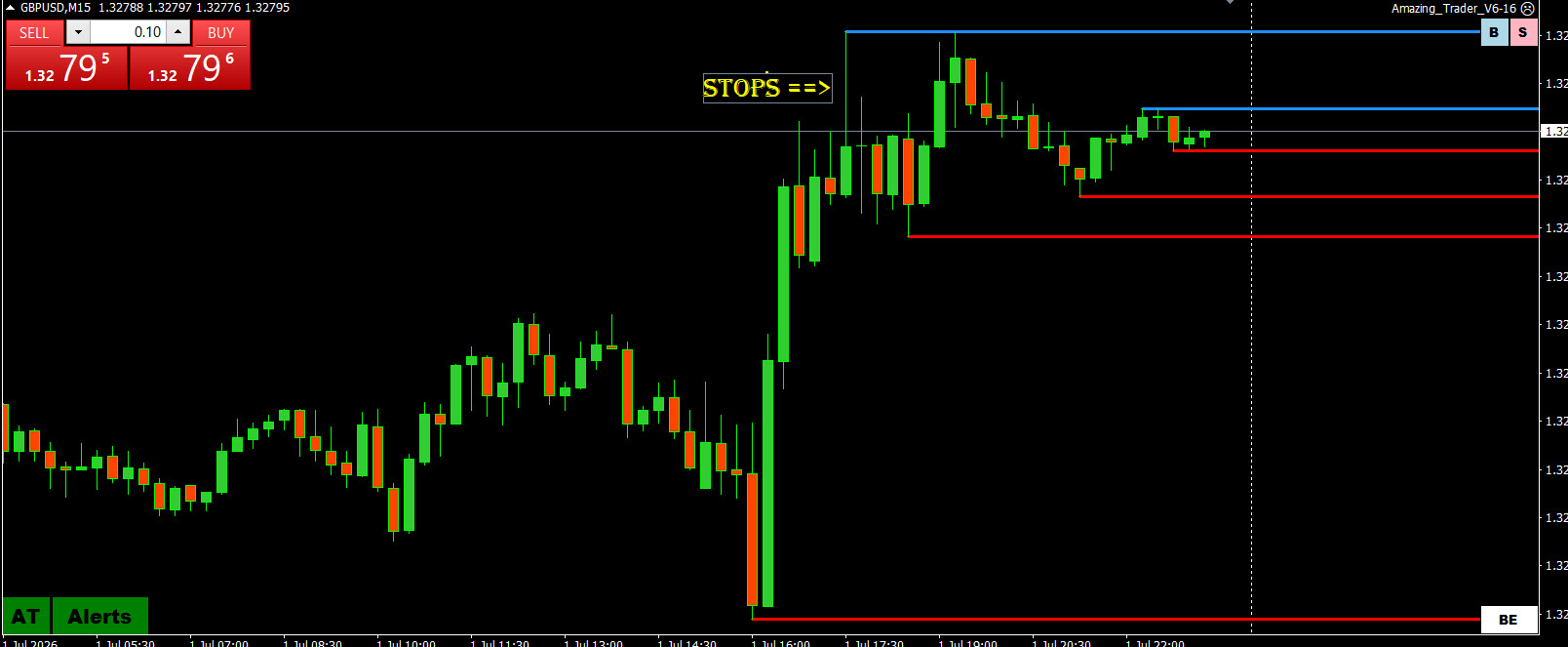
These moves often indicate that liquidity above or below a key level has been taken out.
While not every breakout is a stop run, many short-lived moves that fail quickly are driven by this liquidity-seeking price action.
The Strategic Importance of Stops in DayTrading
Stop losses are not just about risk protection—they also provide insight into market behavior.
Understanding where stops are likely placed can help traders:
- Identify vulnerable sides of the market
- Anticipate short-term volatility
- Avoid entering crowded trades
- Improve timing of entries and exits
In many cases, the most profitable side of the market is the one least exposed to stop runs. When traders align with the stronger side of liquidity, they often avoid being caught in whipsaw moves.
Trading tip:
Identifying the strong side of the market is more than half the battle in executing successful trades. The strong side is the side least vulnerable to seeing stops get run.
Stops Are a Core Part of Market Structure
Stop loss orders are far more than a risk management tool. They are a central part of market structure and price discovery.
In forex trading, where liquidity is constantly shifting and algos actively search for order clusters, stop levels often become key drivers of price movement.
Understanding how and why markets target these areas can give traders a significant advantage. It is not about predicting every stop run, but about recognizing where market vulnerability lies.
At the end of the day, disciplined risk management remains the foundation of survival.
Because in trading, the goal is not to be perfect but to stay in the game long enough to trade another day.
Day Trader
Daily Tips
Forex Forum
Test Plugin
About author

Add comment